Vedic and Tamil poets
Updated On: 15 September, 2024 07:13 AM IST | Mumbai | Devdutt Pattanaik
Much like modern poets, the ancient poets survived because of patronage



Illustration/Devdutt Pattanaik
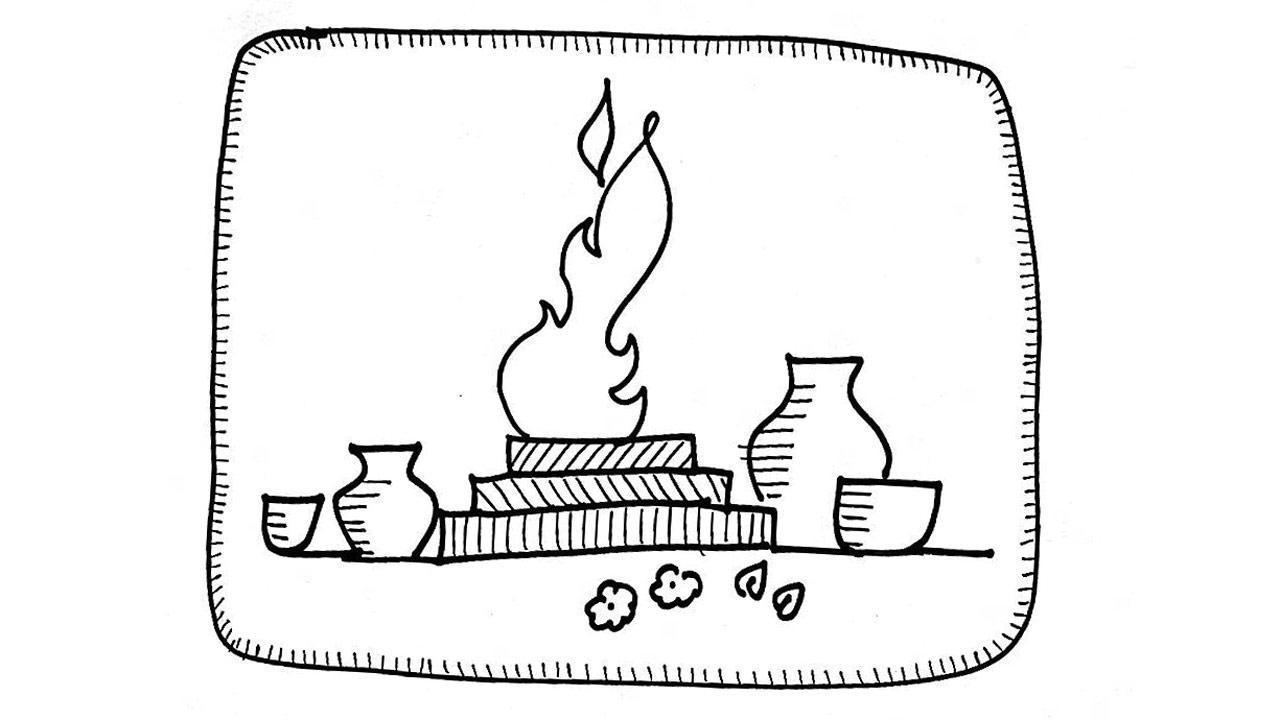
 Many today think of the Vedic mantras as cosmic vibrations. But they are, in fact, Sanskrit poetry composed by thoughtful, sensitive and creative human beings. The purpose of the words was to get the gods in the sky to come down to earth, engage with humans, receive the offerings and give fortune in return. It is a simple transaction—what we call “yagna”. Transactions are the hallmark of civilised human conduct. The opposite of transaction is extraction and exploitation of one group by another.
Much like modern poets, the ancient poets survived because of patronage. If gods received poems, and patrons received fortune, the poet received payment. Thus, we have many Vedic dana-stutis or “hymns in praise of donors”. These hymns recount the gifts or donations received from a chieftain, usually those gifts they receive after victory in war. The bard or a seer would have consecrated the weapons used in the war as well as provided battle charms. In exchange, they usually received cattle, horses, utensils, grain and even women. This was happening in the North Indian river basins 3,000 years ago.
Trending Stories
Latest Photos
Latest Videos
Latest Web Stories
ADVERTISEMENT
Mid-Day Fast
ADVERTISEMENT

ADVERTISEMENT