Waste pickers script their future
Updated On: 07 July, 2024 07:10 AM IST | Mumbai | Sumedha Raikar Mhatre
How does it feel to be perceived on par with scavenging rodents and dogs? Such uncomfortable questions, posed to waste pickers by eminent interviewers, now are part of a groundbreaking volume which is also a badge of honour for the recycling community





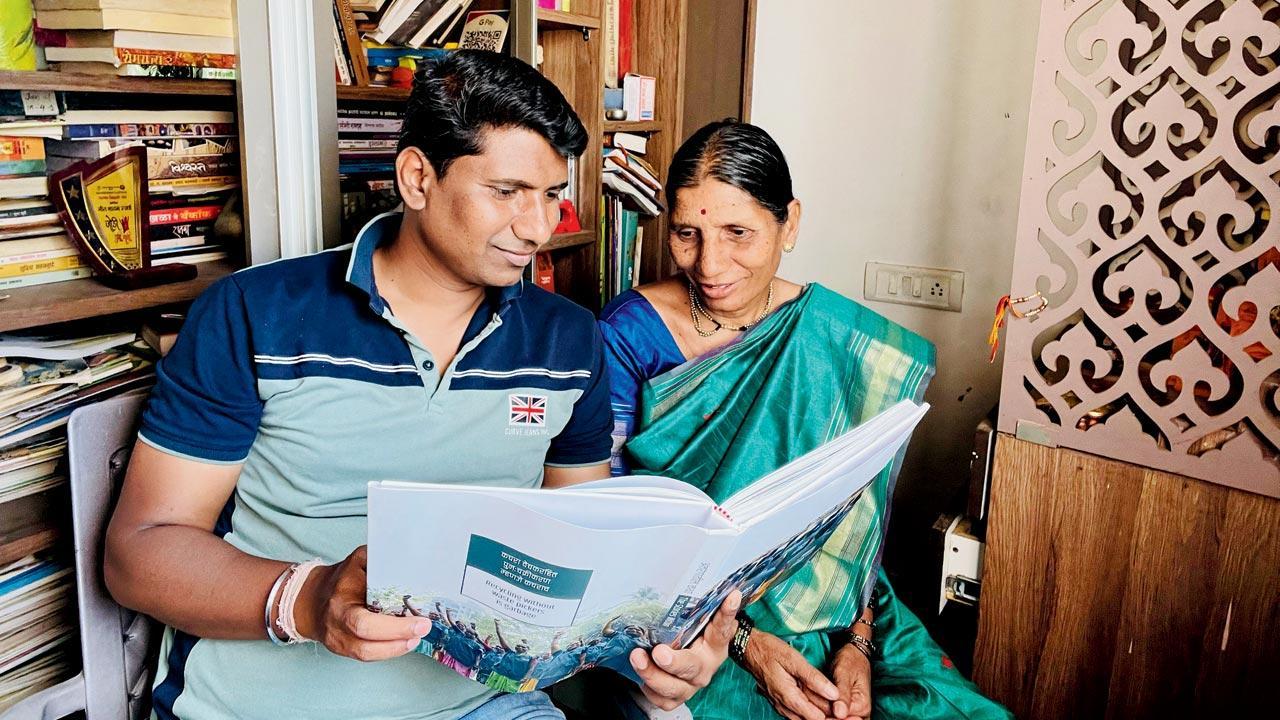
Suman More and her journalist-son Laxman read about her three-decade struggle as a waste picker in the book Antarangatil Katha (The Stories Within)
 Who built seven-gated Thebes? Was it kings who hauled the chunks of rock? Famed writer Bertolt Brecht’s poem, Questions From A Worker Who Reads challenged traditional narratives that celebrate kings and generals while overlooking the achievements of the common people. Nearly a century after Brecht’s call for recognition of toiling hands, Pune’s waste pickers pose a similar question. A new 240-page Marathi-English hardbound title, Antarangatil Katha (The Stories Within) echoes Brecht’s critique of working-class marginalisation. In Brechtian style, the waste pickers ask, “The Mohalla Committee segregated waste in 156 wards/Did the members dunk their hands into the bins?/Or did they ring the doorbell to collect the garbage/Armed with police verifications?”
The poem prefacing the testimonies of 20 waste pickers from Pune, underlines a global truth about those who reclaim the discards of our society. Can we recycle waste without factoring in the welfare and rights of those who dirty their hands? Does society owe a duty towards the impoverished who find refuge in refuse—the men and women who source recyclables from streets, homes and landfills? Do we owe them safety gear, medical support, fair compensation, guaranteed wages, and respect? Do their children deserve social security?
Trending Stories
Latest Photos
Latest Videos
Latest Web Stories
ADVERTISEMENT

Ganeshotsav 2026

ADVERTISEMENT