






What do you think, MK Gandhi?
Updated On: 03 October, 2021 11:07 AM IST | Mumbai | Shweta Shiware
What would the Mahatma have made of a charkha on display at a posh London address? How would he, famously reluctant to embrace technology, have received the QR code on a khadi garment? Two Indian women celebrating heritage weaving traditions while employing European tailoring, demonstrate that Gandhi’s fashion system has multiple realities

Listen to this article :
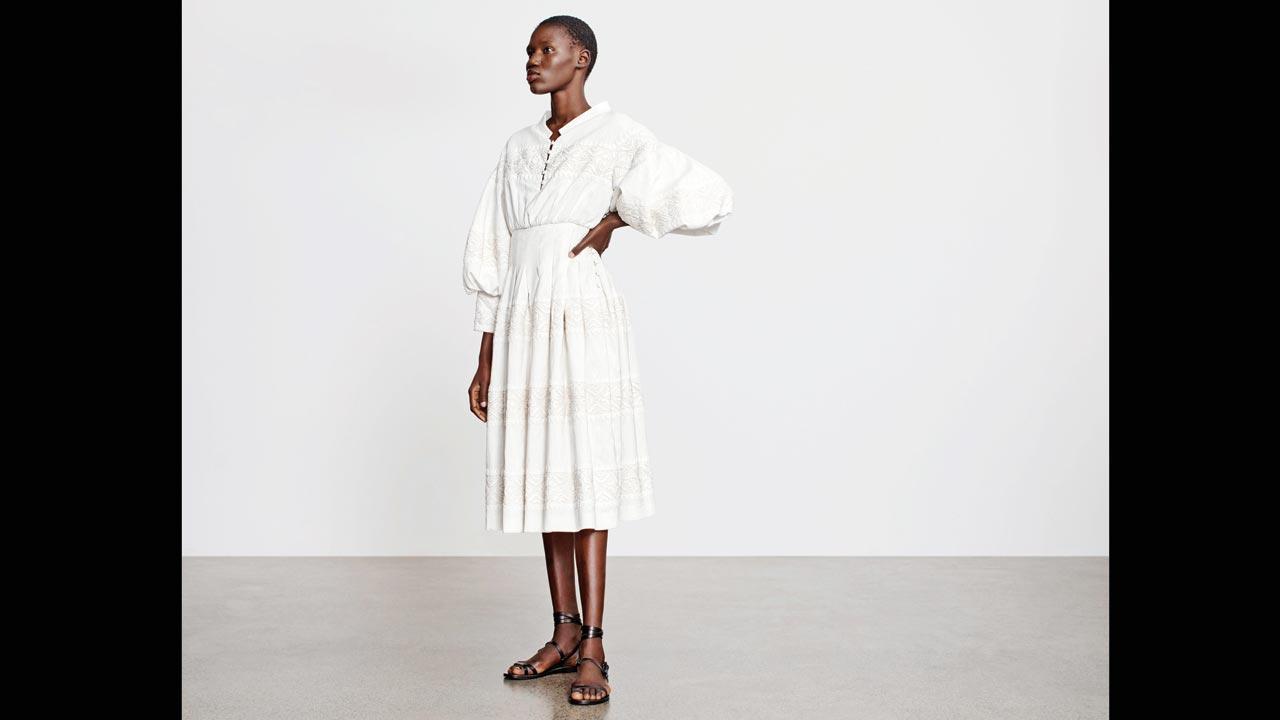
A model wears an off-white cotton khadi balloon sleeve dress (7,000 pounds) by Varana. The sustainable luxury fashion house competes with top Italian and French brands
 More than 100-years ago in India, a man with a slight frame and round Windsor style spectacles sat behind a charkha to stir a social revolution. He created a deep link between political independence and personal empowerment using self-reliance and hand-spun cloth. He was Mohandas Karamchand Gandhi. And the cloth that changed the fate of the nation was khadi. An insightful chapter by professor Peter Gonsalves in The Clothing for Liberation: A Communication Analysis of Gandhi’s Swadeshi Revolution discusses, Swadeshi—The Gandhian Fashion System as an alternative network that would promote through cloth and clothing an economic self-sufficiency (Swadeshi) powerful enough to establish self-government (Swaraj).
By inspiring Indians to spin desi cotton, weave and wear it, the sartorial became political, writes Gonsalves. Gandhi believed in the liberating aspect of hand-spun, hand-woven cloth, not merely to challenge colonial subversion but sustain the socio-economic welfare of weavers in India’s villages, while redefining the meaning of power, progress and civility.
Read Next Story
Trending Stories
Latest Photos
Latest Videos
Latest Web Stories
ADVERTISEMENT
Mid-Day Fast
ADVERTISEMENT

ADVERTISEMENT