






What drapes India
Updated On: 31 December, 2023 04:17 AM IST | Mumbai | Shweta Shiware
Eighty-four sarees telling nine stories—the second edition of a stupefying exhibition helmed by Bengaluru’s The Registry of Sarees succeeds in celebrating the history and beauty of the country’s indigenous garment

Listen to this article :
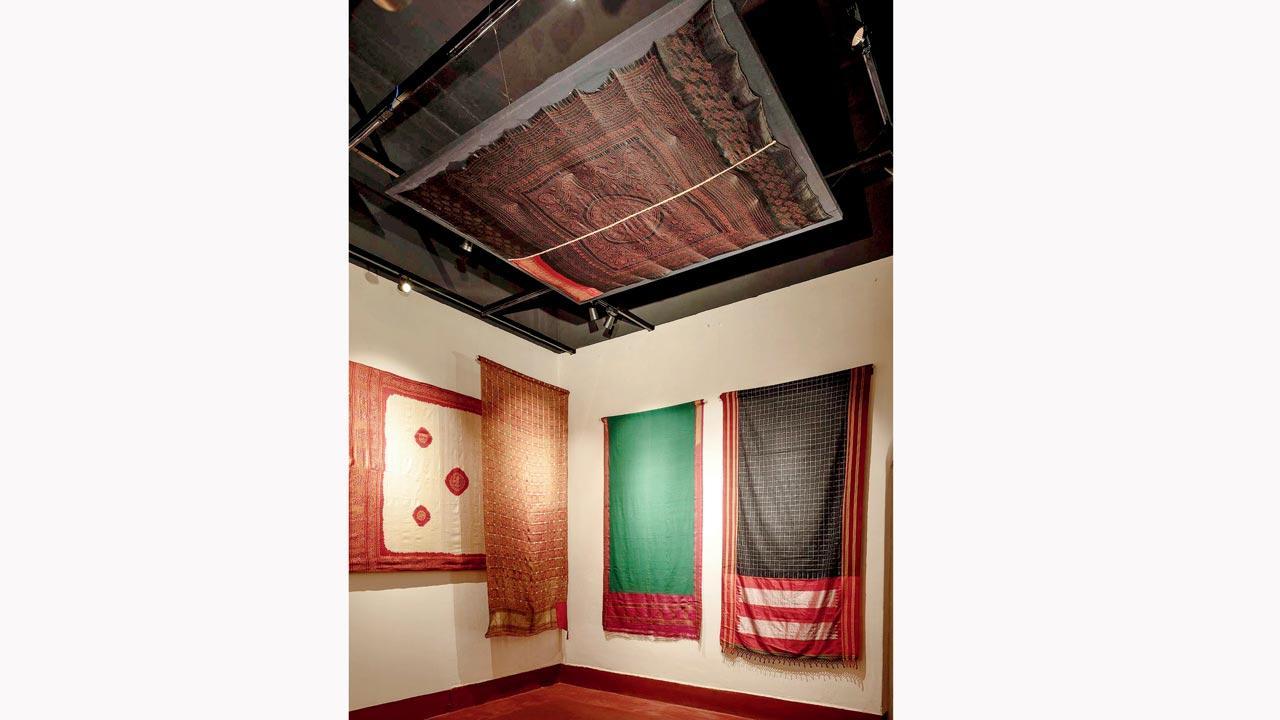
The Red section at the Red Lilies, Water Birds exhibition depicts variations of the hue represented in textiles across India. (Right to left) Karnataka Ilkal, Gadwal saree, Gharchola and Panetar highlight the technique of tie-dye using seeds. The textile that hangs from the ceiling is a rai dana Bandhani odhna, made using mustard seeds in gajji silk. It belongs to the Kutchi Memon community. Pic Courtesy/Pallon Daruwala
 The Indian handloom industry, it seems to me, rests on one premise: the saree. As long as that unstitched but very structured cloth remains in abundant usage, all is well.”
This visceral quote in the foreword to The Master Weavers: Festival of India in Britain, Royal College of Art 1982, by Martand Singh or Mapu as he was widely known, connects the culture of the saree with the greater purpose of the nation’s economy and well-being. Mapu, who remains India’s beloved textile revivalist, led a pioneering series of exhibitions titled, Vishwakarma—Master Weavers for the Festivals of India in the 1980s and 1990s.
Read Next Story
Trending Stories
Latest Photos
Latest Videos
Latest Web Stories
ADVERTISEMENT
Mid-Day Fast
ADVERTISEMENT

ADVERTISEMENT