






What the Chinese saw in India
Updated On: 25 July, 2021 06:59 AM IST | Mumbai | Devdutt Pattanaik
They were Faxian in the Gupta period, Hiuen Tsang or Xuanzang during the reign of Harshavardhan of Kannauj (who was a contemporary of Prophet Muhammad) and Itsing shortly thereafter

Listen to this article :
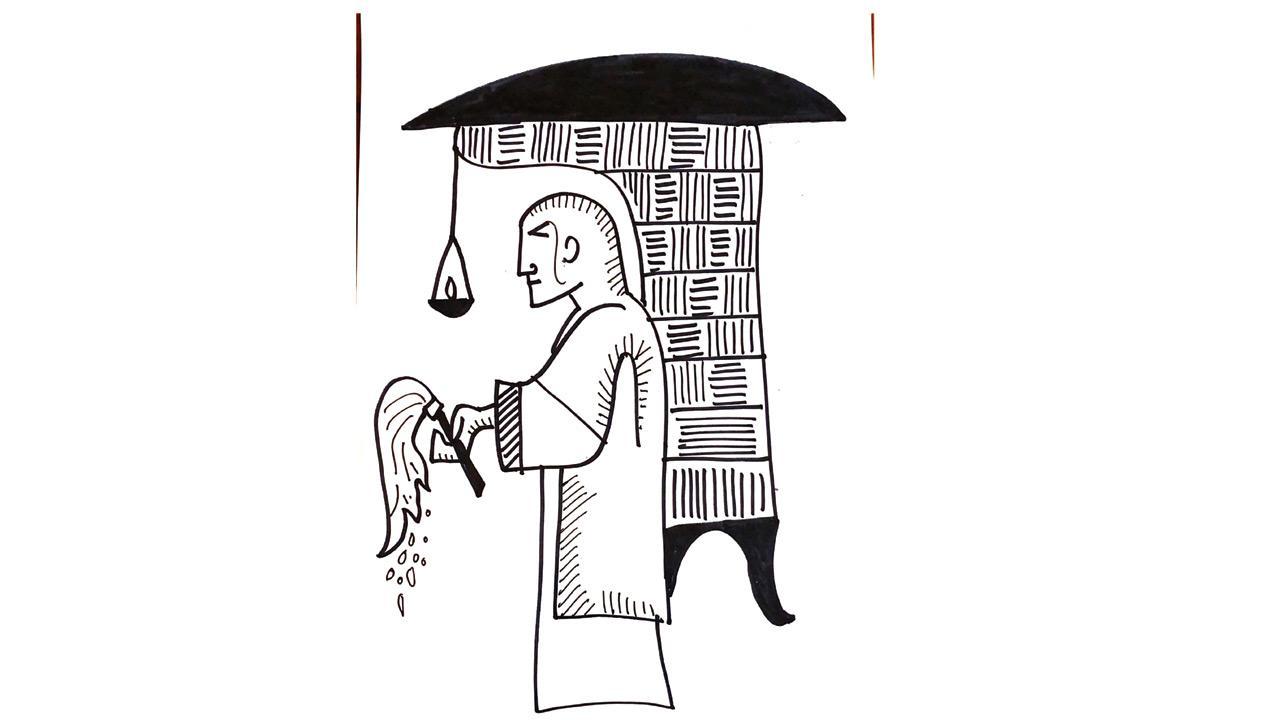
Illustration/Devdutt Pattanaik
 Chinese scholars realised the Buddhism they were receiving was in diluted or corrupted form. So, many monks travelled to India by the land and sea routes to get the original documents. They translated them into the local languages. This happened between the fifth and the eighth century, over a period of 300-400 years, for certain. We have accounts of three monks that tell us the period when Indian society transitioned gradually from Buddhism towards Hinduism. They were Faxian in the Gupta period, Hiuen Tsang or Xuanzang during the reign of Harshavardhan of Kannauj (who was a contemporary of Prophet Muhammad) and Itsing shortly thereafter.
Faxian clearly documents the existence of untouchability in India. It speaks of how Indian society in general avoided alcohol and non-vegetarian food. It tells us of certain people who lived on the outskirts of the village. They had to announce their presence by beating metal sheets. Their settlements were marked by flags. They were the ones who were involved in the sale of meat. They were called Chandalas and considered to be fierce beings, who were kept at a distance.
Read Next Story
Trending Stories
Latest Photos
Latest Videos
Latest Web Stories
ADVERTISEMENT
Mid-Day Fast
ADVERTISEMENT

ADVERTISEMENT