When horses first came to India
Updated On: 19 December, 2021 07:14 AM IST | Mumbai | Devdutt Pattanaik
We know this because they composed the text we now know as the Rig Veda





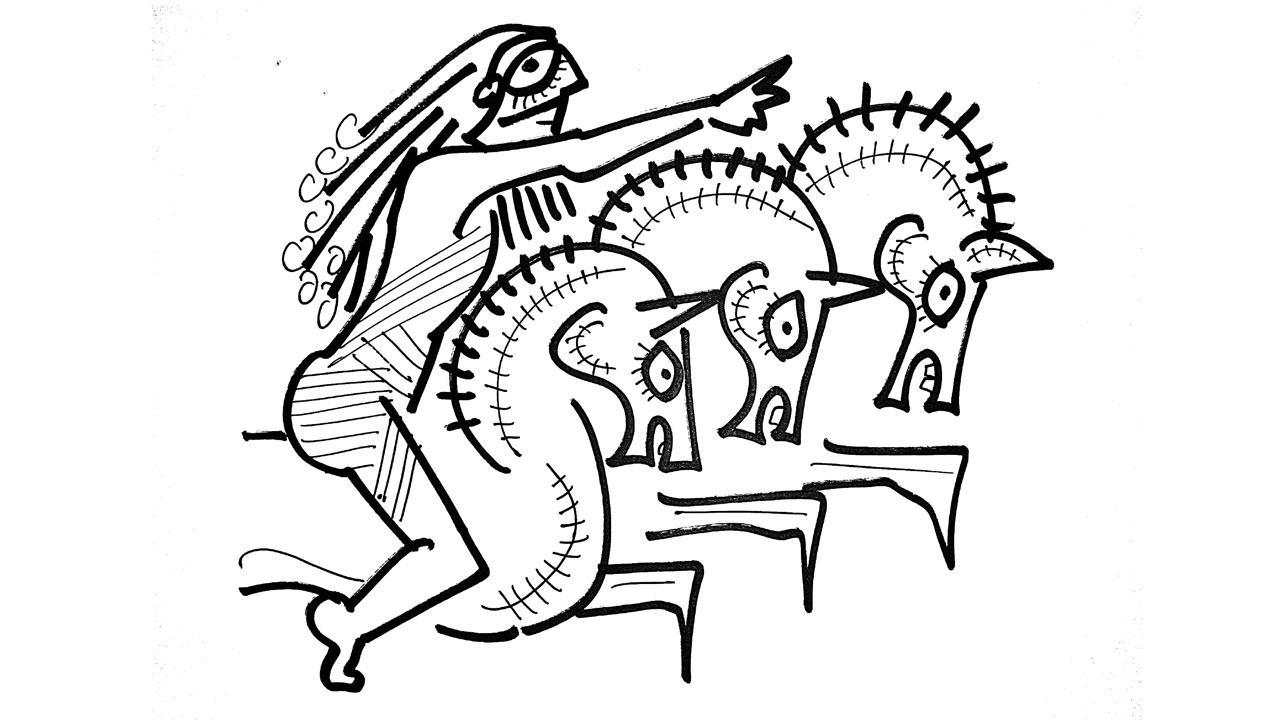
Illustration/Devdutt Pattanaik
 The horse is not native to the Indian subcontinent. It has been the most prized import from the northwestern regions, from Arabia, Central Asia and from Eurasia. This is why the kings who live in the Northwest part of India, in Gandhara and Madra were referred to as Ashwapati, in the Ramayana and Mahabharata. By contrast, the kings of India were called Gajapati because they were known for exporting elephants. So, India exported elephants and imported horses.
Genetic studies have revealed that the horse was domesticated around 4,000 years ago. Until now, it was difficult to prove when the horse was actually domesticated. Studies have shown that horses were domesticated in 2,000 BCE, on the northern shores of the Black Sea, in the Eurasian steppes. Five hundred years later, around 1,500 BCE, this horse made its way across Central Asia to the northern plains of India by a group of people who called themselves Aryas. We know this because they composed the text we now know as the Rig Veda.
Trending Stories
Latest Photos
Latest Videos
Latest Web Stories
ADVERTISEMENT
Mid-Day Fast
ADVERTISEMENT