Why our democracy is a charade
Updated On: 15 April, 2024 06:42 AM IST | Mumbai | Ajaz Ashraf
Only the wealthy can dream of contesting elections, an exercise that can be viewed as a means to control the masses and legitimise State policies promoting the interests of big businesses





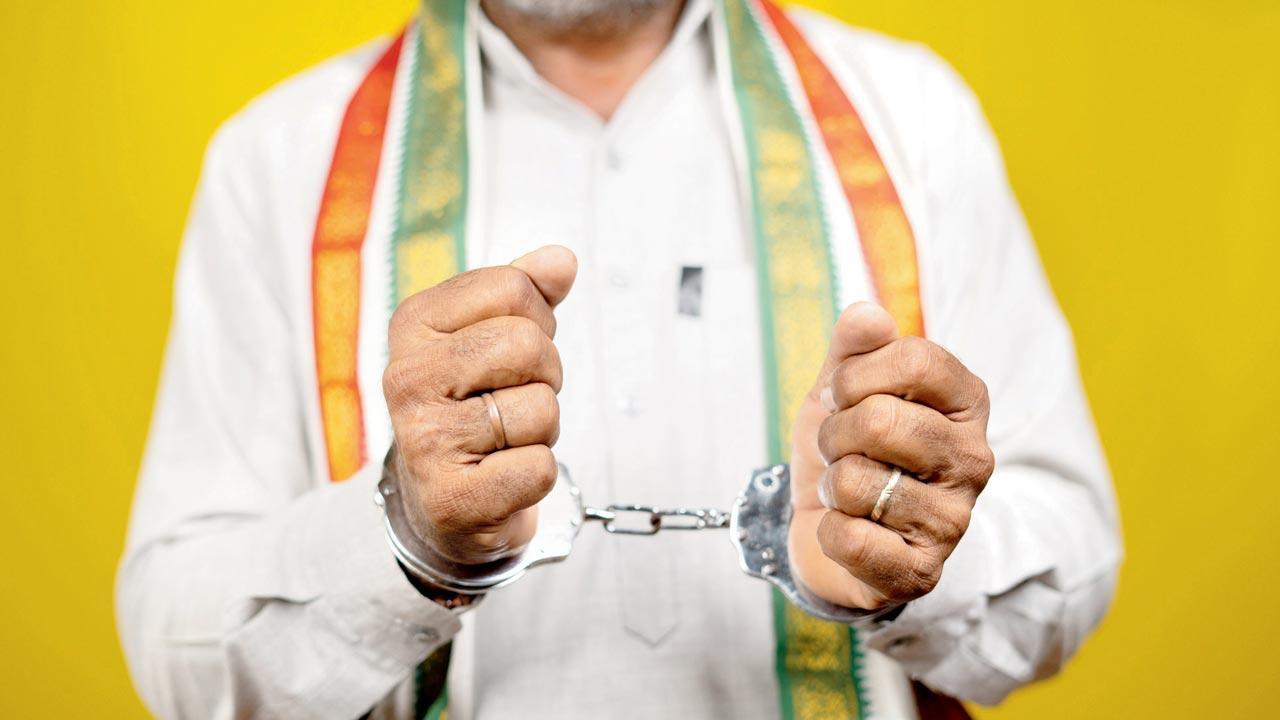
In 2019, 14 per cent of all candidates had been booked for serious crimes. But such candidates comprised 30 per cent of that Lok Sabha. Representation pic
 India’s democracy is becoming a rich person’s game, in which criminal antecedents of contenders are seldom disadvantageous. It is an arena from where those not wealthy or inclined to committing crimes are increasingly excluded. Our democracy spawns a governing class, aka political class, which treats elections as an instrument to control crores of Indians, or voters, with their consent, for promoting a variety of interests, not least those of big businesses.
Shocked, are you? You must reflect on the data on myneta.info, a platform of the Association for Democratic Reforms. It shows 88 per cent of members of the 2019 Lok Sabha were crorepati, up from 82 per cent in 2014. Yet, of all candidates who contested in the 2019 elections, only 29 per cent were crorepati, up by two per cent in comparison to 2014. The might of money simply knocks out most non-crorepatis from the fray. Clearly, the richer the candidate, the greater his/her chances of triumphing.
Trending Stories
Latest Photos
Latest Videos
Latest Web Stories
ADVERTISEMENT

Ganeshotsav 2026

ADVERTISEMENT