






Woven in the Himalayas: Stories from the roof of the world
Updated On: 29 December, 2024 08:28 AM IST | Mumbai | Shweta Shiware
As 2025 approaches, makers from the Himalayas and North East region reclaim the stage, weaving new meanings into India’s cultural fabric, while honouring the stories of its land and people

Listen to this article :
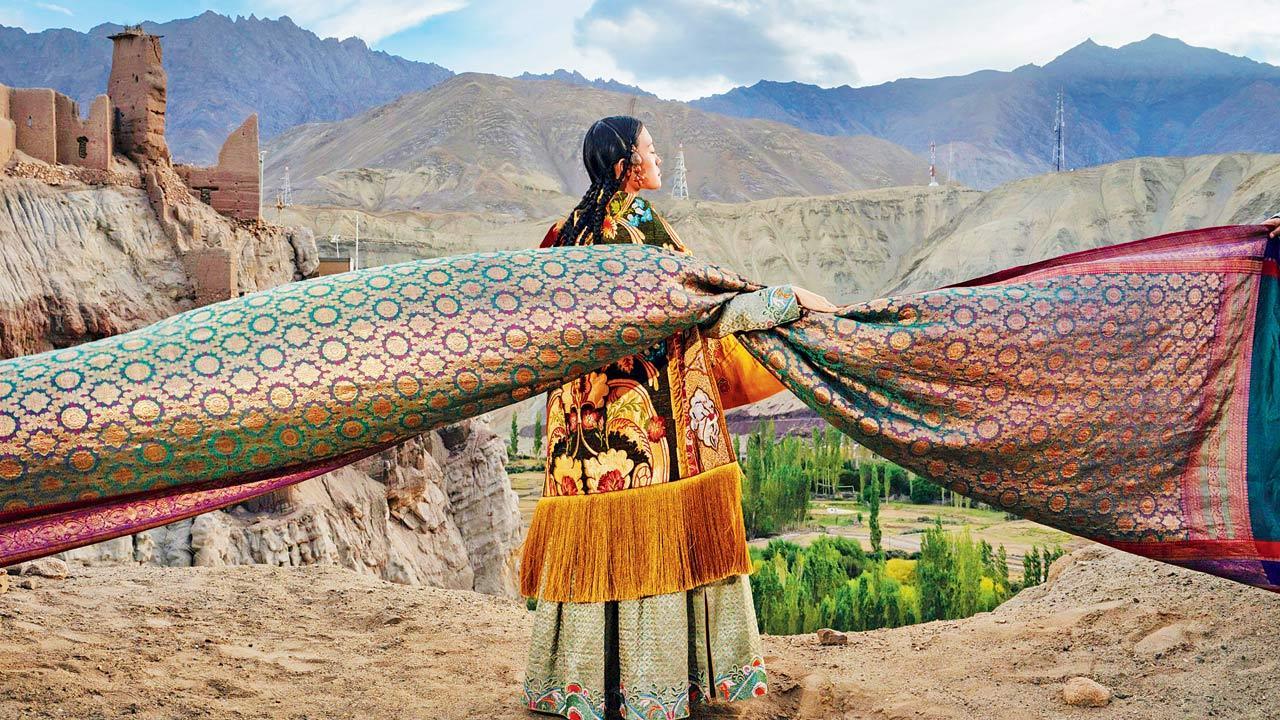
Namza Couture’s HOR-LAM collection, set in Basgo—a village along the Indus River in Ladakh—celebrates the deep connection between land and textile traditions. Pics Courtesy/Avani Rai
 Model Anika Bogi stands, hands folded, gaze fixed, against a double-humped camel, dressed in a Ladakhi Sulma. With its elongated lines and voluminous silhouette, the robe evokes ritual. Designed to fall into a gown, it gathers (sul) at the waist with knee-length slits for ease of movement. Crafted from wool, brocade, velvet, or silk, it is secured at the waist with a brightly coloured skeyrak (sash) and paired with a tilin blouse, its wide sleeves rolled up in warmer weather. Traditionally worn by Ladakhi women, the Sulma often signifies marital status.
In another photograph, Mila Dechen wears a Mogo, a traditional Ladakhi dress layered with a Bok—a wool shawl with vibrant colours and intricate patterns, reflecting Ladakh’s textile heritage. It’s paired with a gyaser, a silk brocade woven with gold and silver zari on wooden pit looms in Banaras.
Read Next Story
Trending Stories
Latest Photos
Latest Videos
Latest Web Stories
ADVERTISEMENT
Mid-Day Fast
ADVERTISEMENT

ADVERTISEMENT