






Home / News / World News / Article /
APEC summit begins after Trump, Xi agree to ease trade tensions
Updated On: 31 October, 2025 11:21 AM IST | Gyeongju (South Korea) | AP
Leaders of 21 Asia-Pacific nations opened the APEC summit in South Korea after US President Donald Trump and China’s Xi Jinping agreed to ease trade tensions. The two-day event focuses on boosting regional cooperation, free trade, and addressing challenges like AI, aging populations, and supply chain risks

Listen to this article :
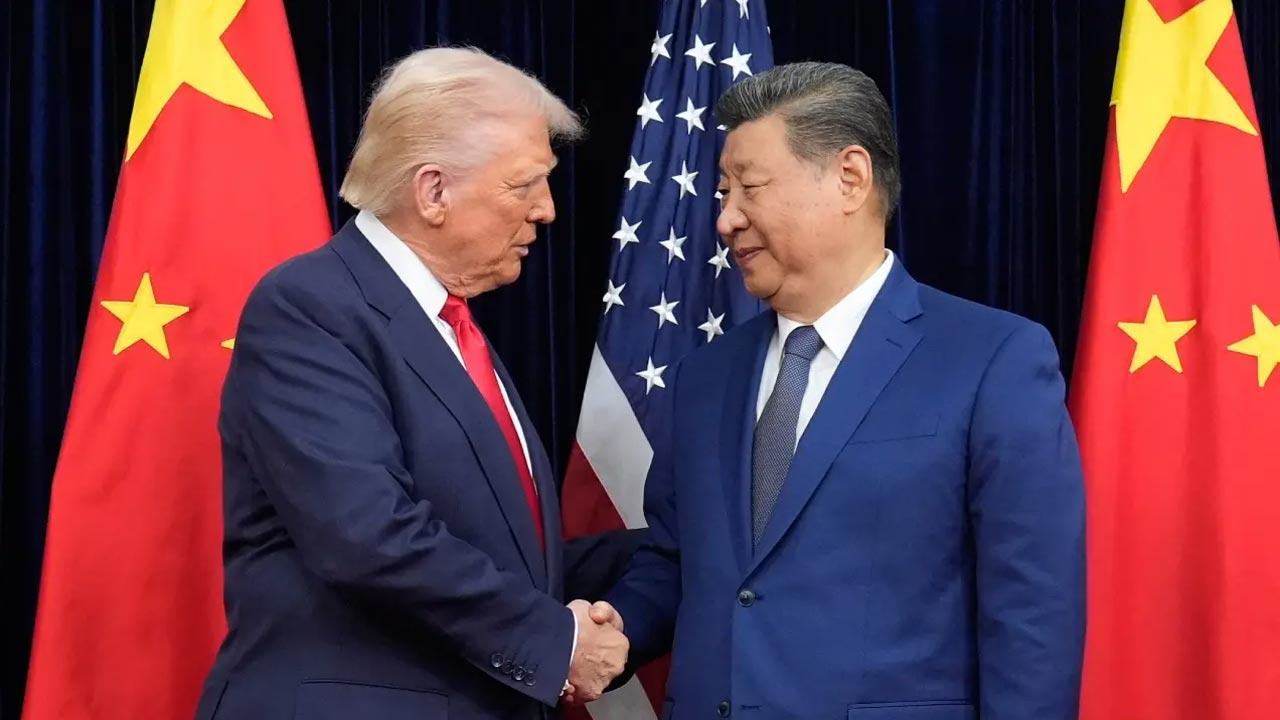
US President Donald Trump and Chinese President Xi Jinping. Pic/AFP
Leaders of 21 Asian and Pacific Rim nations were set to open their annual summit Friday to discuss how to promote economic cooperation and tackle shared challenges, a day after President Donald Trump and Chinese President Xi Jinping agreed to take steps to ease their escalating trade war. This year`s two-day Asia-Pacific Economic Cooperation summit in the South Korean city of Gyeongju city has been heavily overshadowed by Thursday`s Trump-Xi meeting. Trump described the meeting as a roaring success, saying he would cut tariffs on China, while Beijing had agreed to allow the export of rare earth elements and start buying American soybeans. Their deals were a relief to the world economy, as experts previously warned that a failure to dial down trade tensions between the world`s two largest economies were certain to deepen global economic uncertainties.
Established in 1989 during a period of increased globalisation, APEC represents more than half of global trade. The forum champions free and open trade and investment to accelerate regional economic integration and has also been credited with bringing together countries embroiled in competitions to work together on common initiatives without binding statements. The APEC region now faces challenges like strategic competitions between the US and China, supply chain vulnerabilities, aging populations and the impact of AI on jobs. The US strategy has recently been shifted to economic competitions with China rather than cooperation, with Trump`s tariff hikes and "America first" agenda shaking markets and threatening decades of globalisation and multinationalism.
Trending Stories
Latest Photos
Latest Videos
Latest Web Stories
ADVERTISEMENT
Mid-Day Fast
ADVERTISEMENT

ADVERTISEMENT