






Home / News / World News / Article /
Carbon nanotubes discovered on the far side of the moon
Updated On: 24 January, 2026 08:57 AM IST | Beijing | Agencies
These structures were first synthesised in labs in the 1990s. The discovery showcases how future space missions might process local soil into advanced materials for deep-space exploration

Listen to this article :
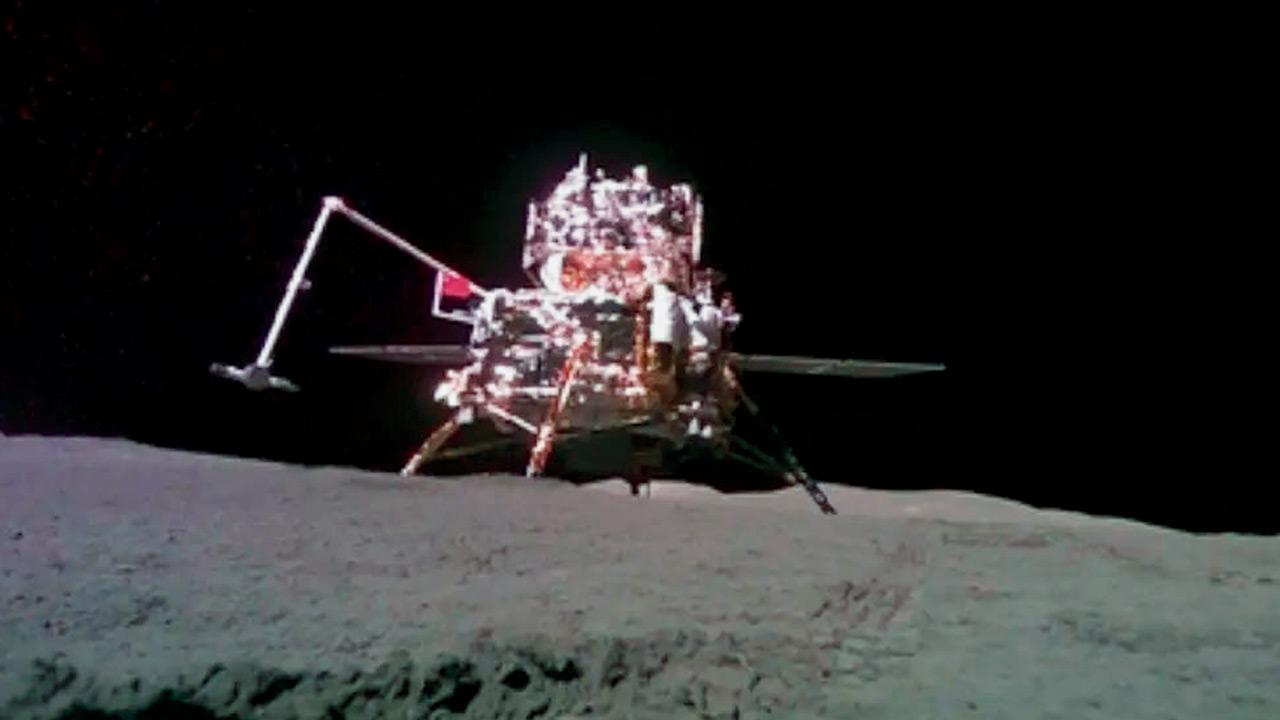
The Chang’e-6 lander and ascender. PIC COURTESY/CNSA
Researchers from Jilin University identified single-walled carbon nanotubes in soil samples brought back from the far side of the moon by China’s 2024 Chang’e-6 mission. Until now, it was believed that these carbon nanotubes could only be made in high-tech laboratories and was impossible due to natural phenomena.
This is the first definitive evidence that nature can build these advanced nanostructures on its own. These structures were first synthesised in labs in the 1990s. The discovery showcases how future space missions might process local soil into advanced materials for deep-space exploration.
Trending Stories
Latest Photos
Latest Videos
Latest Web Stories
ADVERTISEMENT
Mid-Day Fast
ADVERTISEMENT

ADVERTISEMENT