






Would a DLS model have given England the win despite rain on Day 5?
Updated On: 04 August, 2025 02:41 PM IST | London | mid-day online correspondent
With forecasts indicating a high probability of further showers on the final day, the lack of a definitive result could prove frustrating for both teams and fans alike. In this context, the potential application of DLS style method tailored for Test cricket, specifically for fourth-innings chases, is worth serious considering

Listen to this article :
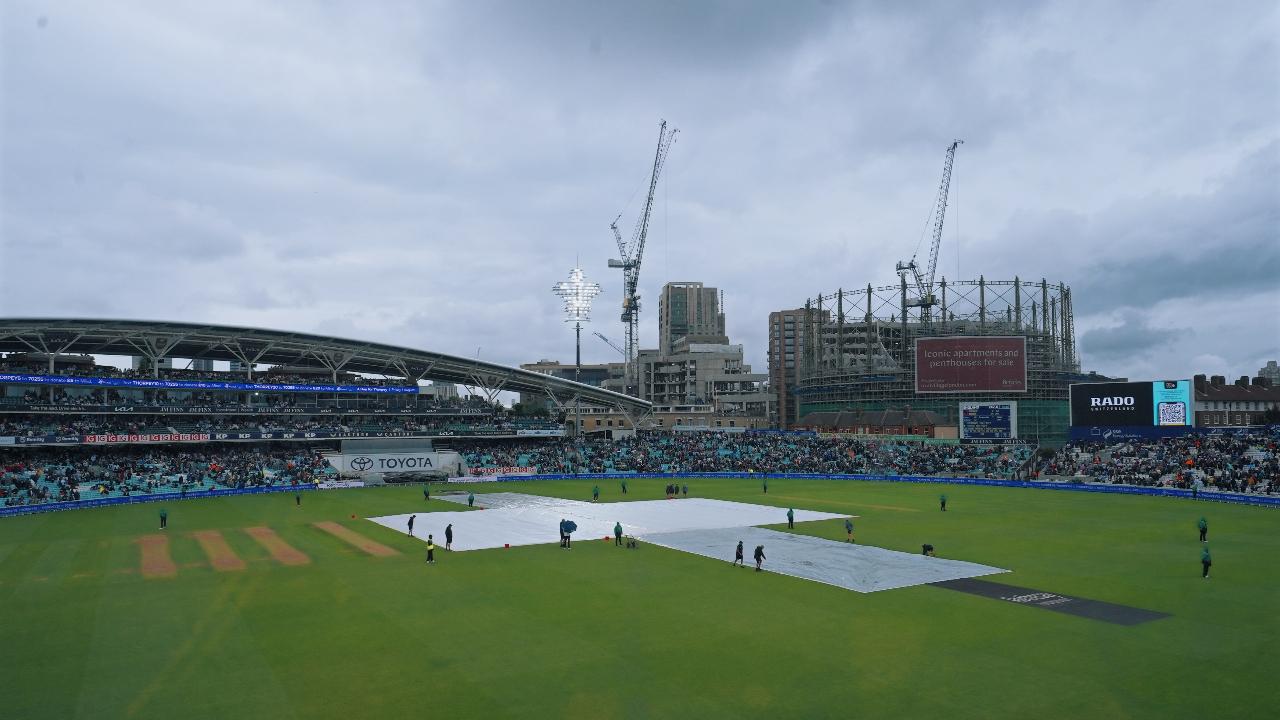
Covers rolled out at The Oval (Photo: BCCI)
As the ongoing fifth Test between India and England reaches its climax, the looming threat of rain has once again cast doubt on a clear result. England require just 35 runs to seal a 3-1 series win, while India are only four wickets away from pulling level. However, bad light followed by rain on Day 4 brought proceedings to an abrupt halt, leaving the final day weather dependent.
With forecasts indicating a high probability of further showers on the final day, the lack of a definitive result could prove frustrating for both teams and fans alike. In this context, the potential application of a Duckworth-Lewis-Stern (DLS) style method tailored for Test cricket, specifically for fourth-innings chases, is worth serious consideration.
While the DLS method has long been a staple of limited-overs cricket, offering fair outcomes in weather-affected matches, Test cricket remains vulnerable to anticlimactic draws, particularly when the match is poised for a dramatic finish. A modified DLS model that takes into account remaining overs and wickets could offer an alternative resolution for matches impacted by time lost to weather, without disrupting the traditional fabric of the game.
Trending Stories
Latest Photos
Latest Videos
Latest Web Stories
ADVERTISEMENT
Mid-Day Fast
ADVERTISEMENT

ADVERTISEMENT