Home / Sunday-mid-day / Article /
A class apart
Updated On: 03 December, 2023 08:10 AM IST | Mumbai | Aastha Atray Banan
Manju Kapur’s new book revisits the family, and asks pertinent questions about gender roles, class politics





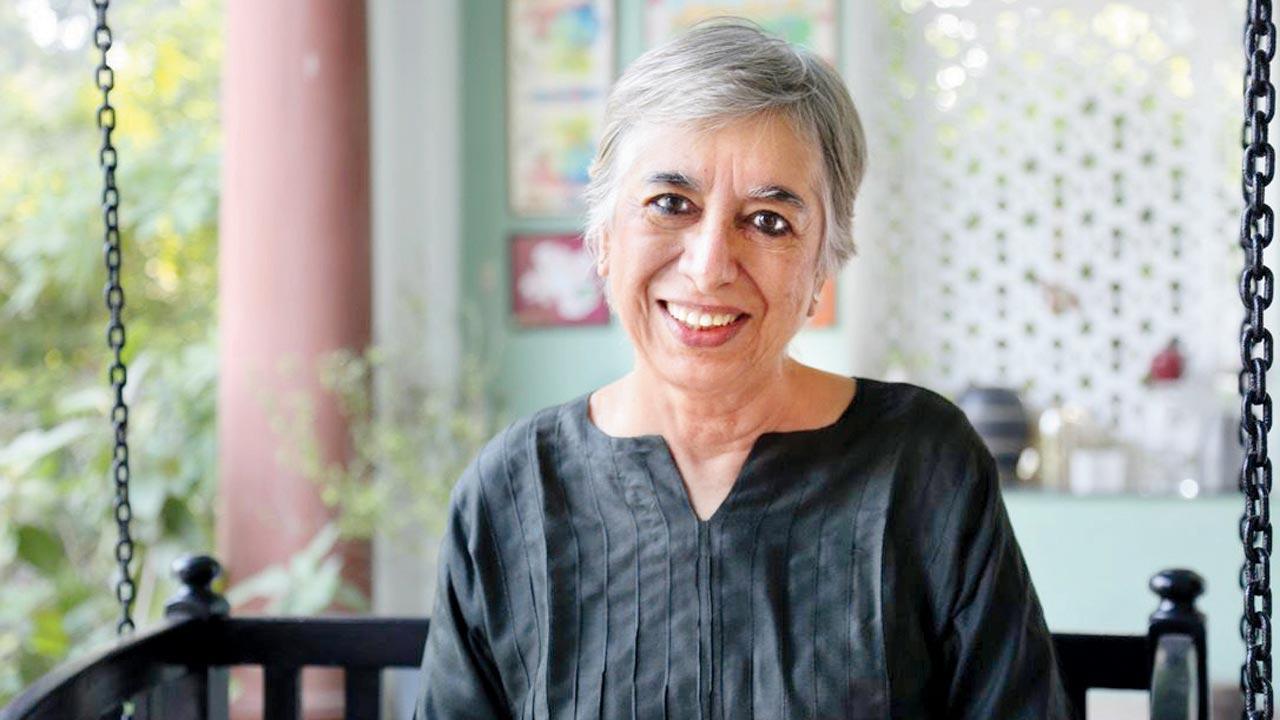
Manju Kapur
When I write, I don’t have a story in my mind. It takes shape as I write. But I had been thinking about domestic help—we live in such proximity—they are the first people you see in the morning, and last you see at night…,” says author Manju Kapur about how her new book, The Gallery (Penguin Random House India), came to be. “So close, yet so far from each other—I was just interested in how one social set impacts the other.”
Kapur, whose debut novel, Difficult Daughters (1998), won the 1999 Commonwealth Writers’ Prize for Best First Book; and who has written a spate of books since then including Custody (2011) and The Immigrant (2008), also taught Literature at Delhi’s Miranda House for 25 years. This writer, who also graduated from Miranda House in 2002, remembers Kapur as a kind and warm teacher who taught her the canonical Antony and Cleopatra by William Shakespeare. Her books have also been successfully adapted as TV shows by Ekta Kapoor—Pardes Mein Hai Mera Dil (Star Plus) was based on Kapur’s novel The Immigrant, and Custody was called Yeh Hai Mohabbatein. A Married Woman (2002), which is about a love story between two women, and which was set against the Babri Masjid demolition, was adapted as a web series on AltBalaji. The Gallery is about the intertwined lives of Minal and Ellora Sahni, wife and daughter of a successful New Delhi lawyer; and Maitrye and Tashi, wife and daughter of the office peon at the Sahni law practice. Kapur talks of independence, identity and womanhood by focusing on a set of principal characters who are connected through work and physical proximity, yet separated by class and power. As we go through the book, we are struck by how astute Kapur’s observations are—especially as they speak to women who are often meant to live their life in a certain way, and follow a certain timeline.
Trending Stories
Latest Photos
Latest Videos
Latest Web Stories
ADVERTISEMENT

Ganeshotsav 2026

ADVERTISEMENT