Home / Sunday-mid-day / Article /
India's Anglo-Indian community join the fight for representation in Delhi
Updated On: 09 October, 2022 08:47 AM IST | Mumbai | Nidhi Lodaya | Mitali Parekh
In light of today’s Delhi dharna for reservation, most Anglo-Indians say political representation will not help them, but as a community they insist they need it to speak for the scattered diaspora





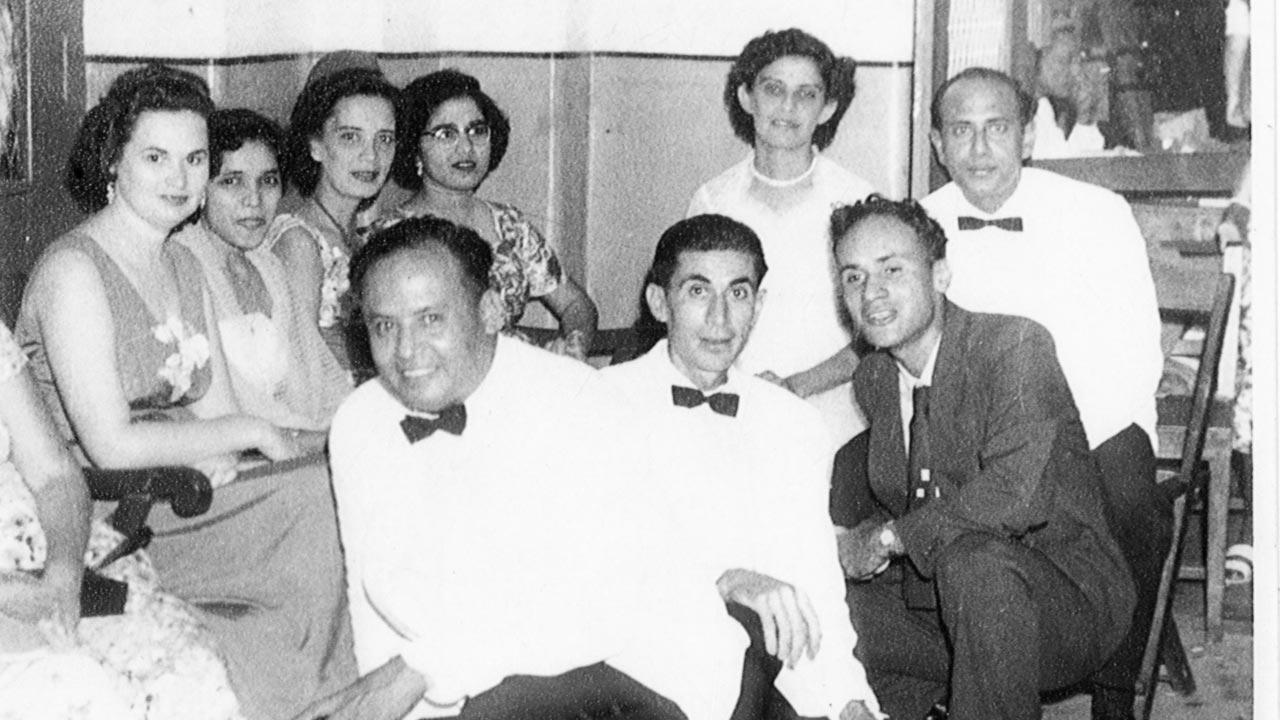
Clarice ‘Clarie’ M Griffin (in spectacles) and R. James ‘Jimmy’ Griffin (in the dark suit) at a dance in Vizag in the early 1960s. Their son, Peter Griffin, now lives in Navi Mumbai and is disconnected from the community
For a community that’s at least four lakh people-strong, the Anglo Indians are surprisingly invisible. Or have been rendered so. A large contingent, led by the Anglo-Indians’ Joint Action Group, has staged a dharna today at Jantar Mantar in Delhi for restoration of Article 334B that saved them two seats in Parliament, and one in each state legislative assembly. The 126th Constitutional Amendment came in 2019 on the foundation of the 2011 Census that counted just 296 Anglo-Indians in the entire country. A part of the error was that most of them were clubbed under the generic banner of Christians, and only a few classified as Anglo-Indians (AI). Summing up the members enlisted in various Anglo-Indian associations all over the country, community leader Gilbert Faria puts the population at four lakh.
Nothing could underline the predicament of these “stateless people” more starkly.
Trending Stories
Latest Photos
Latest Videos
Latest Web Stories
ADVERTISEMENT

Ganeshotsav 2026

ADVERTISEMENT