Home / Sunday-mid-day / Article /
A human pipeline
Updated On: 24 April, 2022 08:10 AM IST | Mumbai | Nidhi Lodaya
An exhibition opens in the city to pay ode to the fast-disappearing water carriers once revered for quenching the thirst of soldiers and travellers





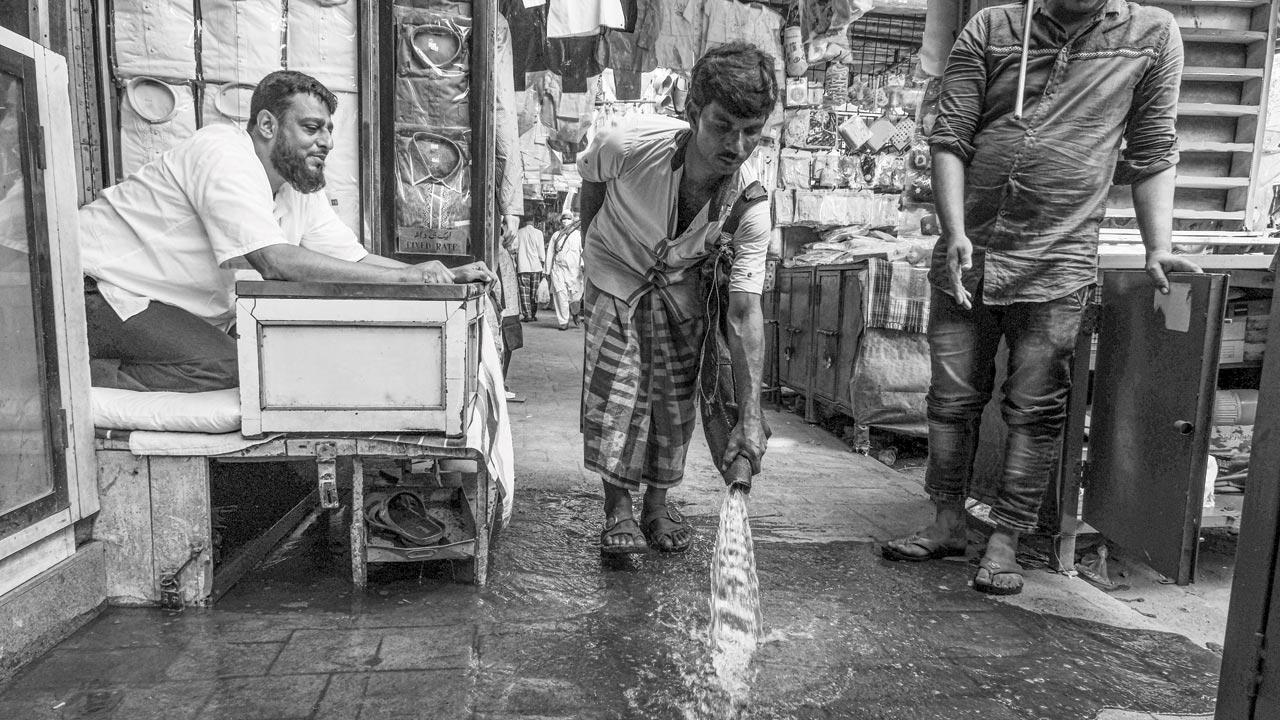
The Bhishtees, members of a Muslim tribe, are believed to have followed the Mughals to India. Carrying the characteristic goat skin mashaq, the last functioning members now provide water to street vendors and pavement dwellers. Pic courtesy/Aslam Saiyad
Upon entering the Durbar Hall at the Asiatic Society, this writer was greeted by a friendly man standing behind a bioscope. For those born in this century, that’s a travelling movie theatre. Taking up one small section of the high-ceiling hall was Aslam Saiyad, enthusiastically winding the bioscope for the few interested enough to turn up for an exhibition on a humid Thursday afternoon.
Saiyad is like one of those friendly, talkative strangers you meet on a local train. He jokes about his bioscope to a pair of boys who had never seen one and tells them about his ongoing photography exhibition: The Last Bhishtees of Mumbai.
Trending Stories
Latest Photos
Latest Videos
Latest Web Stories
ADVERTISEMENT
Mid-Day Fast
ADVERTISEMENT