






Home / Sunday-mid-day / / Article /
A song and dance about Cavel
Updated On: 05 June, 2022 08:43 AM IST | Mumbai | Jane Borges
A Konkani tiatr inspired by a Catholic neighbourhood in South Mumbai is making waves in Goa, almost 130 years after it was first composed

Listen to this article :
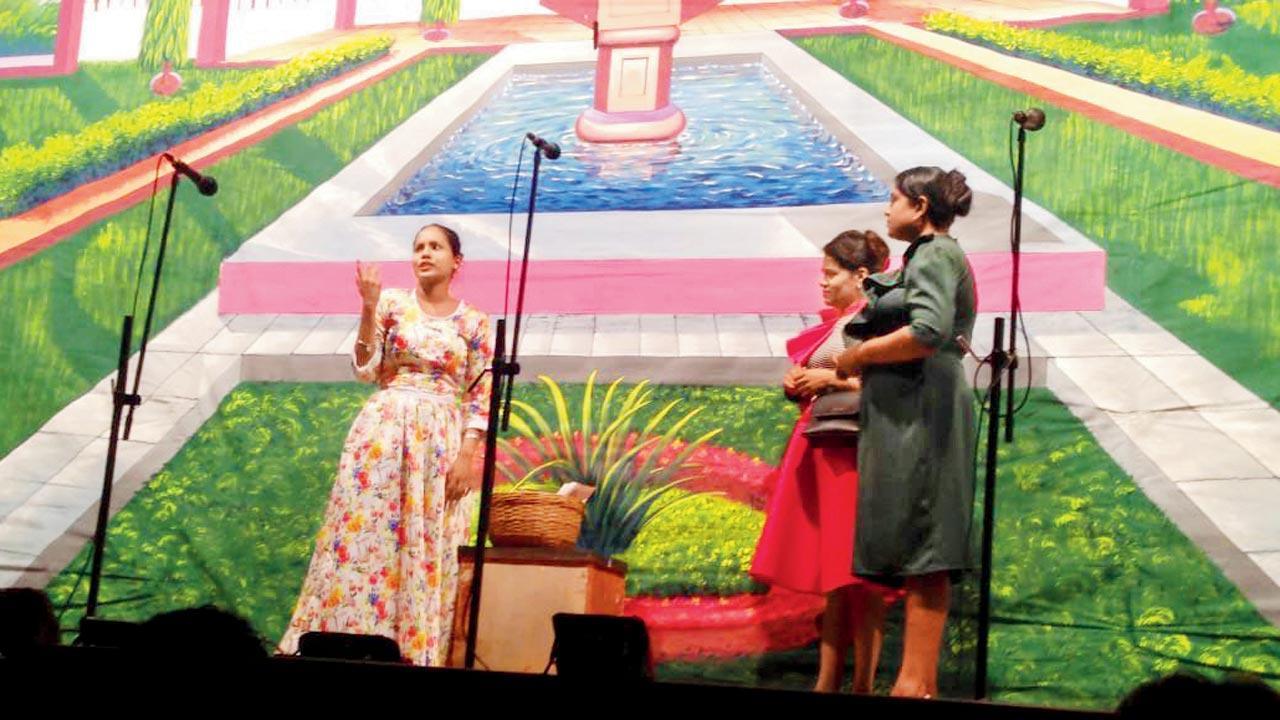
The three-hour-long play is set in a garden in Charni Road from where you can hear the church bell ring. Pic courtesy/Frederick Noronha
Every road leads to home. Sometimes, it could also be a play. As a writer, with a curiosity for the vanishing Goan-Catholic neighbourhoods of South Mumbai, it’s become a passion project of sorts to look for connections between people and the places they inhabit, and how the two shape the history of the city. That’s how we learnt of Cavelchi Sundori (The Belle of Cavel), a tiatr—a Konkani drama form—being staged in Panjim after nearly 80 years, and named after the once bustling Christian enclave near Kalbadevi.
Helming the production is Goa-based tiatr artiste, director and researcher Michael Gracias, who as he tells us over a phone call, was approached by the Tiatr Academy of Goa to stage one of late actor and composer João Agostinho Fernandes’ tiatrs, as part of his 150th birth anniversary celebrations on December 14, last year. “I chose this particular tiatr, because it is not only the first one that he ever wrote [in 1893], but also because of how far ahead of its time it really was,” says Gracias, who spent his early years in Dadar. “The musical comedy reflects on the lives of the emancipated and educated Christian women, and how they break away from tradition, opting for love over an arranged union. In 1893, exploring such a theme was not just bold, but unheard of.” It also touches on the issues of caste and class, upheld by the traditionalists. “I like to call it a ‘perfect tiatr’. It has all the ingredients of a contemporary tiatr and discusses issues that concern us even today. The comic timing too, is superb. Since Agostinho performed comedy on stage, he had the knack for it. That’s possibly why the play continues to resonate with people,” adds Gracias.
Read Next Story
Trending Stories
Latest Photos
Latest Videos
Latest Web Stories
ADVERTISEMENT
Mid-Day Fast
ADVERTISEMENT

ADVERTISEMENT