Home / Sunday-mid-day / Article /
‘Aap upar nahin aa sakte toh mein kya karoon?’
Updated On: 26 May, 2024 10:19 AM IST | Mumbai | Sanjeevni Iyer
Amid the growing competition for on-time deliveries, coupled with structural challenges, companies like Zomato and Amazon are reinventing the terms of delivery for their differently-abled partners





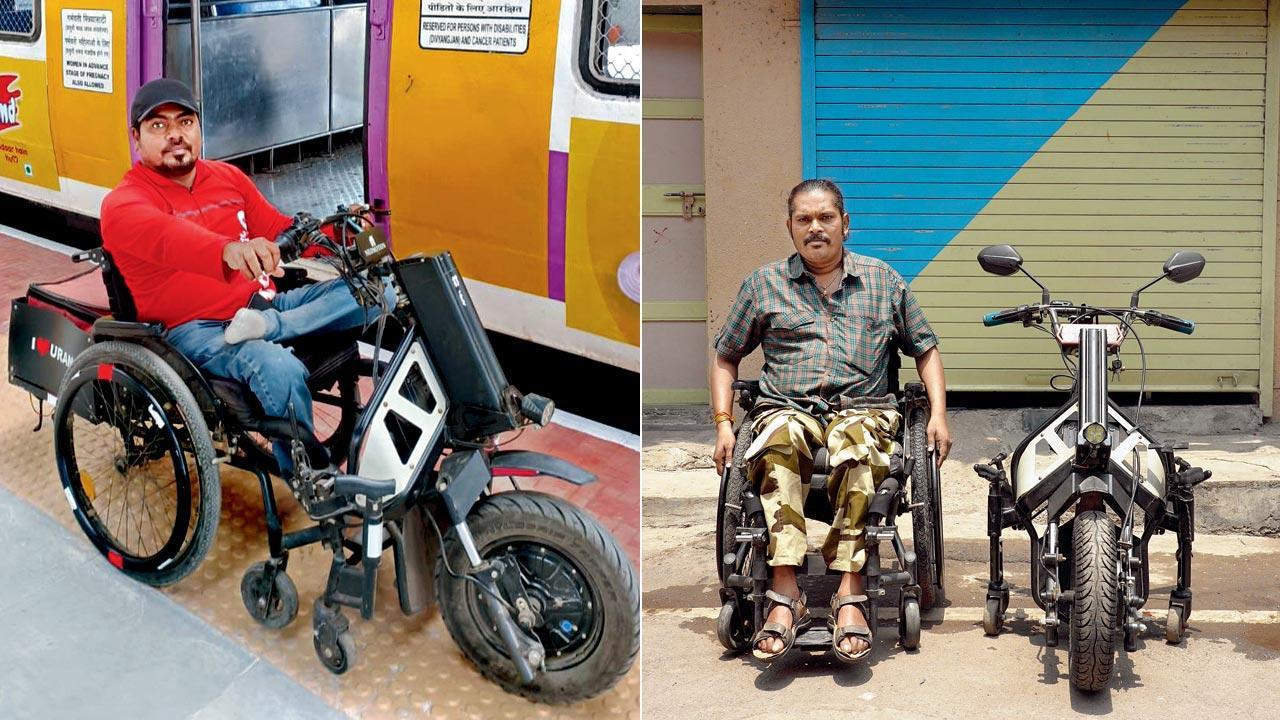
Sandesh Rajguru, a Zomato delivery partner, with his motorbike-convertible wheelchair, on duty; (right) Rahul Shelke, with his motorbike-convertible wheelchair. Pic/Aditi Haralkar
There are times when people refuse to come down and take their food, or even cancel their orders, solely due to a few minutes of delay and inability to deliver at the doorstep. They say, “Aap upar nahi aasakte toh mein kya karu?’[If you can’t make it, then what can I do?],” says Rahul Namdev Shelke, a locomotive-impaired delivery partner from Zomato. The delivery partners or as Zomato calls them, the Hunger Heroes of the country, are often applauded for their quick delivery services. But, what happens when those heroes are differently abled?
In a country with more than five million citizens with disabilities, only 28.3 per cent amount to India’s labour force participation. The primary reason for this marginal difference is the country’s lack of accessibility. “In India, the problem starts from the accessibility of transportation for the disabled people. Only less than nine per cent of the buses, which are one of the cheapest modes of transport are accessible,” said Apoorv Kulkarni, visually impaired and the Head of Research and Centre for Inclusive Mobility at OMI Foundation (a policy research and social innovation Think Tank) over a call. The platform economy, which defines the last-mile services of companies like Amazon, Siwggy, and Zomato, is a booming sector in India. However, the delivery services of differently-abled gig workers often fall prey to the organisational challenges in the country. “The lack of accessible and driveable vehicles, the credit gap for differently-abled workers, access to monetisable funds, need for campaigning the employment opportunities, and inaccessible infrastructure in the city at large, serve as a challenge for these workers,” adds Kulkarni.
Trending Stories
Latest Photos
Latest Videos
Latest Web Stories
ADVERTISEMENT

Ganeshotsav 2026

ADVERTISEMENT