







Home / Sunday-mid-day / / Article /
Addas, Aras and a kala ghoda
Updated On: 29 September, 2021 05:50 PM IST | Mumbai | Meher Marfatia
Rambling down 100 metres of shifting-textured Rampart Row in the week Khyber turns 60 and the Wayside Inn proprietor 90

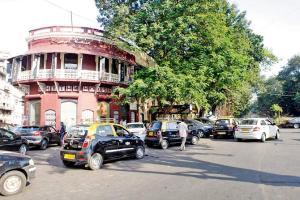
Corner of K Dubash Marg, earlier called Rampart Row for the Bombay Fort ramparts situated here. Pic/ Ashish Raje
 Few streets have more evocative names. Before becoming K Dubash Marg, the Kala Ghoda strip—from its eponymous, not-yet-riderless statue till the Church of St Andrew opposite Lion Gate—was Rampart Row. The former site of Bombay Fort`s ramparts. Behind was Ropewalk Lane. William Milburn`s Oriental Commerce (1825) notes: "Here is a rope walk. For length, situation and convenience it equals any in England… has covering to protect workmen; cables and all sorts of cordage, hemp and coir, are manufactured."
On this tree-lined avenue stands possibly the city`s oldest mahogany. Fronting Ador House, sentinel-like, it is one of a pair planted by missionary explorer Dr David Livingstone himself. The other borders Bombay Natural History Society`s headquarters, Hornbill House, named after William, the hornbill that fluttered into their garden, to reign as the BNHS mascot. Sailing in on the Lady Nyassa for six months in town in 1865, Livingstone seeded the pinnate-leafed mahoganies at Governor Bartle Frere`s behest. "Visiting dignitaries from Chou En Lai to Tito and Khrushchev were encouraged to sow trees," says botanist Ashok Kothari, suggesting we notice star apples outside Khyber too.
Read Next Story
Trending Stories
Latest Photos
Latest Videos
Latest Web Stories
ADVERTISEMENT
Mid-Day Fast
ADVERTISEMENT

ADVERTISEMENT