






Home / Sunday-mid-day / / Article /
Amid Coronavirus pandemic, Mumbai city's biggest 'Jugaad' yet
Updated On: 17 May, 2020 07:00 AM IST | Mumbai | Gitanjali Chandrasekharan, Prutha Bhosle
The pandemic has put weight behind long-time argument to protect open spaces. An expert panel suggests smart tweaks for Mumbai's urban infra while we still have the time

Listen to this article :
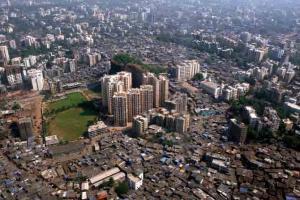
A city starved of open spaces, says the Urban Development Research Institute, is threatened by a Development Plan for 2034 that further dilutes layout open spaces, a real hazard in a post-COVID world. Pic/ Getty Images
In India, the social distancing measures announced have meant jugaad-style appropriation of streets. In efforts to direct social distancing while queuing, sidewalks leading to shops have been marked with yellow circles a meter-and-a-half apart." Thus, reads a mention of Mumbai's efforts to battle the Coronavirus in a research paper titled, The Impact of COVID-19 on Public Space: A Review of the Emerging Questions. Published in April, and available on ResearchGate, the paper has been produced by co-authors located across the world and addresses what a post-lockdown world might look like. What's of particular interest is what stepping out of the lockdown, while still trying to fight a highly infectious, fatal disease, means for Mumbai, that has no room to manoeuvre.
The first signs that the government—city, state and country—was going to implement a strict lockdown, came when Mumbai's suburban rail network shut down. This would be the first time in its 167-year-old history that no suburban trains have run in the city for this long. And, when services do start, the first question to be addressed is how do you reduce crowds on a service that transports lakhs of people daily?
Read Next Story
Trending Stories
Latest Photos
Latest Videos
Latest Web Stories
ADVERTISEMENT
Mid-Day Fast
ADVERTISEMENT

ADVERTISEMENT