







Home / Sunday-mid-day / / Article /
Experts dissect factors responsible for the decline in Palghar’s pomfret catch
Updated On: 27 August, 2023 10:59 AM IST | Mumbai | Jane Borges
Thousands of Koli fishermen living in the Golden Belt of the Arabian Sea stare at a loss of livelihood as Maharashtra’s most famous fish is succumbing to unrestrained fishing, rampant infra development and rapidly warming ocean. And look where it’s headed!

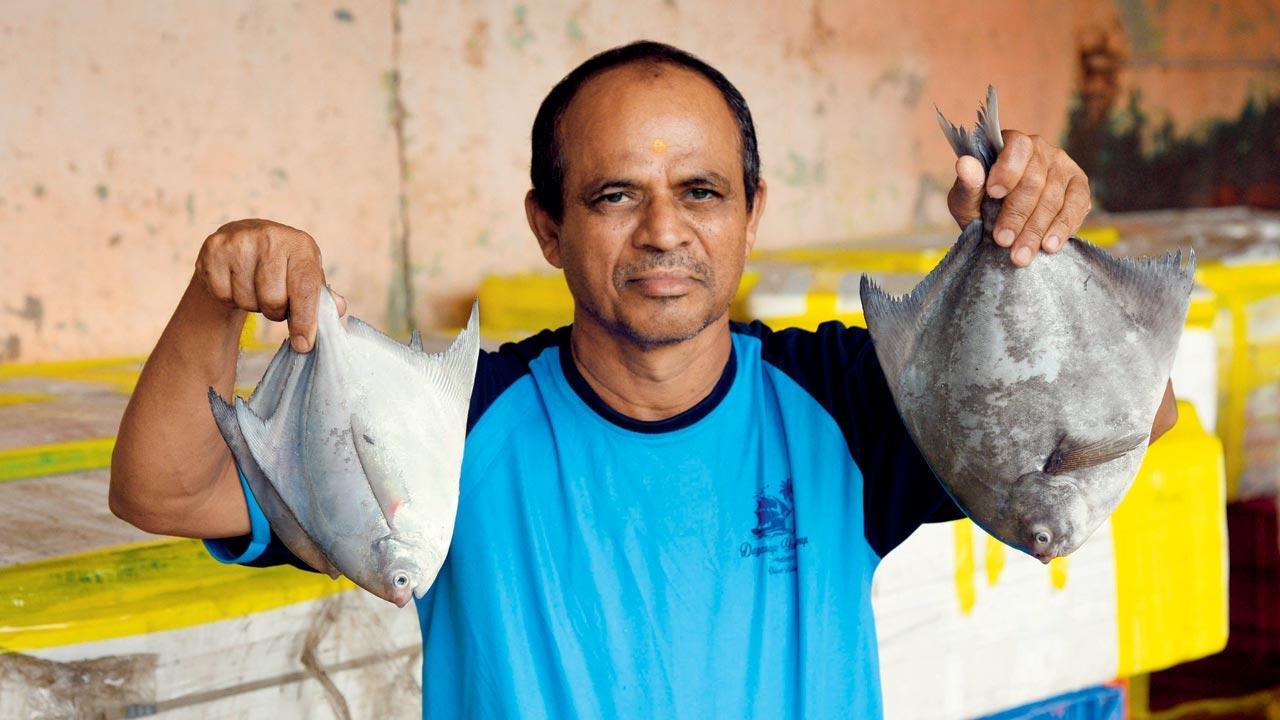
Prahlad Patil, a Koli resident of Satpati, Palghar, who works at the Satpati Fishermen Sarvoday Sahakari Society Ltd, shows a one-kilo weighing super pomfret and its grade 1 version, which are exported to China, the UK, and the Gulf and European countries, via Gujarat. Fishermen say that the larger-sized pomfrets have been depleting in number over the last 30 years. Pic/Satej Shinde
In Satpati, a coastal village 103 km from Mumbai, where the smell of fish and the taste of salt hugging the gentle breeze are gifts of its abundant sea, the sluggish weeks have come to an end. When we arrive late on a Wednesday morning, after travelling for three hours, the village appears abandoned except for a bunch of teenagers, inspired by their hometown hero Shardul Thakur, playing cricket on a grassy patch. “Everyone is out at sea,” Chandrakant Tare, a fisherman turned banker, and the chairman of Satpati Fishermen Sarvoday Sahakari Society Ltd, tells us at his office.
The ban on fishing, enforced by the Maharashtra Marine Fishing Regulation Act, 1981 during the monsoon season to allow breeding and replenishment of stocks, was lifted on August 1. The fishermen have been away since. They will only return 10 days from now. Perhaps even later if the Arabian Sea is generous. It’s not for nothing that this Palghar coastline is called the Golden Belt. The waters hold precious wealth—from the rare and prized ghol fish, to surmai, shark, prawn, Bombay Duck, and silver pomfret/paplet or saranga as locals call it—which have sustained livelihoods for generations.
Trending Stories
Latest Photos
Latest Videos
Latest Web Stories
ADVERTISEMENT
Mid-Day Fast
ADVERTISEMENT

ADVERTISEMENT