Home / Sunday-mid-day / Article /
As cases of hospital fires see a rise, what officials need to do differently
Updated On: 14 November, 2021 08:59 AM IST | Mumbai | Jane Borges
No time to service electrical and medical equipment, makeshift centres set up in a hurry and huge concentration of oxygen make patients in COVID wards sitting ducks for tragedy. What do Indian hospitals need to do differently?





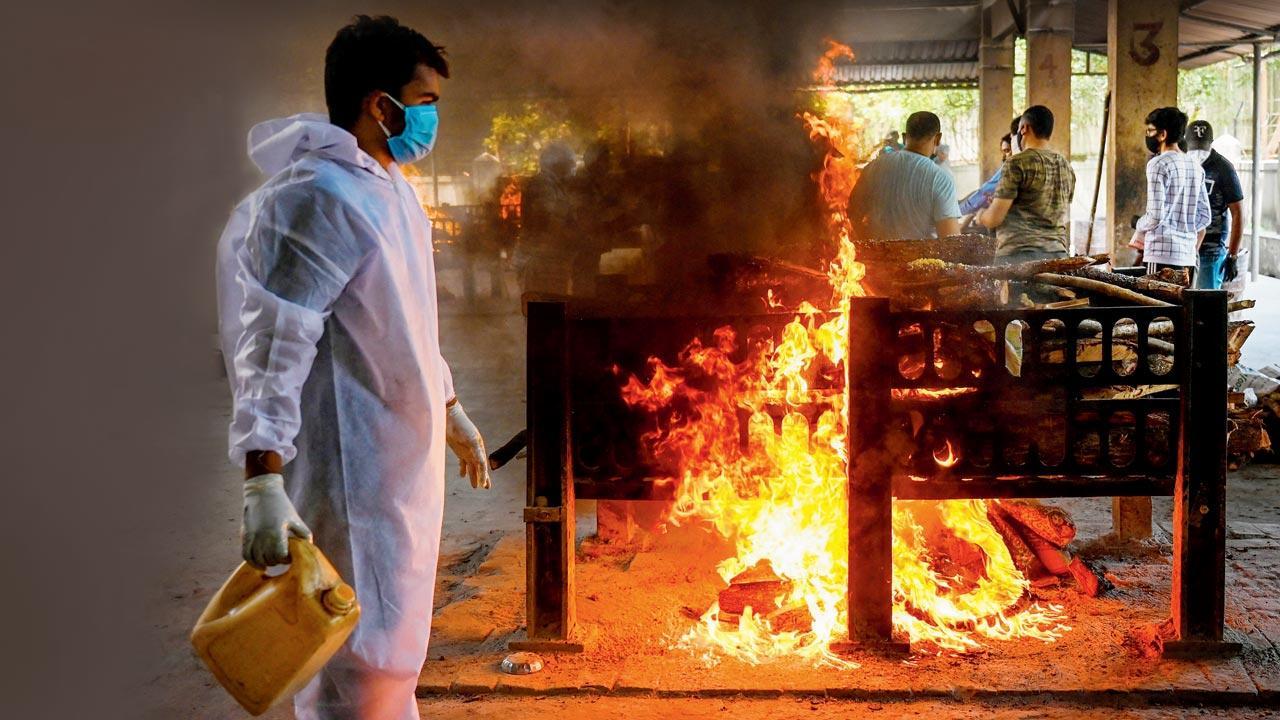
A crematorium staffer lights a pyre of a COVID-19 patient, who died from a fire incident that killed 15 COVID patients at the Vijay Vallabh Hospital in Virar on April 23, 2021. Pic/Getty Images
It's been nearly seven months since a pre-dawn fire at the 17-bed COVID Intensive Care Unit (ICU) of Vijay Vallabh Hospital in Virar killed 15 people, but Vishal Janardan Shirke, station officer, at the Virar West Fire Department, A Ward, says he can recall the April 23 incident minute by minute. Because time, he tells us, was most crucial and could have made all the difference.
“The fire broke out at 2.45 am, and we got a call at 3.13 am. Had we been informed earlier, more lives would have been saved. Since our fire station is just 1.5 km away from the hospital, we reached the hospital within four minutes.” By then, the fire had gutted the second floor, and was still raging. “Since the epicentre was the ICU ward, the windows, though openable, were still tightly shut. One of the first things we did was to break them open with whatever we found, so that the smoke could escape.” By 3.45, they had doused the flames, and evacuated most of patients and staff on the floor above. But, the second floor had turned into a hellhole. “The ward was covered in thick soot, we couldn’t even make out the bodies,” he says. “While entering in, we even accidentally stepped onto some. These were people who were probably attempting to escape, but may have died due to suffocation.” Those on ventilators were most unlucky, as they struggled to leave their beds. Melted plastic oxygen masks were found on their faces and necks, he recalls.
Trending Stories
Latest Photos
Latest Videos
Latest Web Stories
ADVERTISEMENT

Ganeshotsav 2026

ADVERTISEMENT