Home / Sunday-mid-day / Article /
Brahmi stalker
Updated On: 15 May, 2022 09:00 AM IST | Mumbai | Mitali Parekh
Pune-based artist, Aditi Deo, is researching the ancient Indian Brahmi script to bring it into mainstream art and lettering, and fashion a children’s book on how shapes turn into sounds





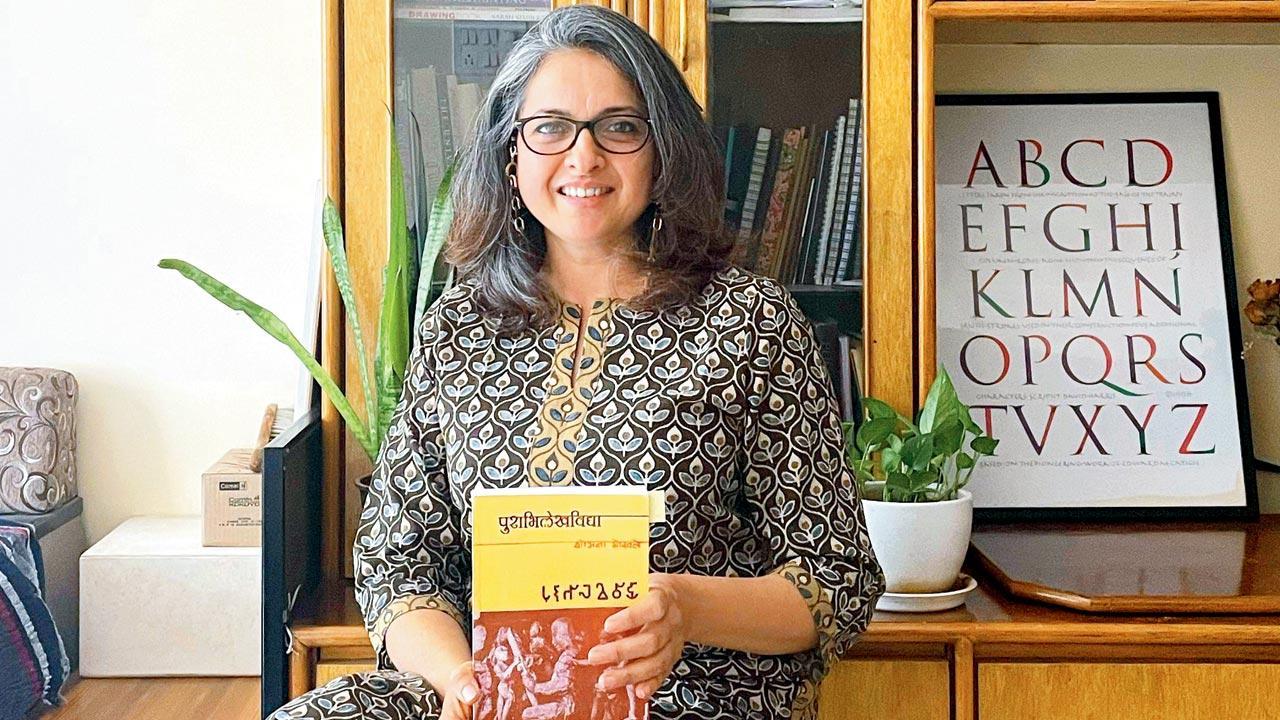
Pune-based artist Aditi Deo is cross-referencing lettering found on ancient artefacts to develop an alphabet chart for Brahmi
Aditi Deo was putting together a module on lettering in March, which sent her down a rabbit hole. The illustrationist teaches calligraphy to adults and children, and mainly works with the Latin script (like the one you are reading right now). She wondered why the Devanagari script was not treated with the same gravitas in calligraphy and lettering lessons, which devoted many pages to the germination, history and evolution of the Latin letters. Information about it is not popularised, and one has to go peering into history books or study Indology. “The history of Latin script can be traced back to 3000 BC, while that of Indian scripts start at 300 BC,” she says.
Through the rabbit hole, she landed on the Brahmi script. “The origin of the Brahmi script is disputed. While some believe it has developed from Aramaic script (northern Semitic script), other say it evolved within the subcontinent. It does not have anything in common with the [yet undeciphered] script of the ancient Indus Valley civilisation, but bears commonality with the northern Semitic scripts [used for Aramaic],” says Deo over an online interview, “But Brahmi is written left to right, while the other is right to left. Brahmi was the progenitor of most scripts in the subcontinent: Devnagiri, Dravidian and even Tibetan. Its role is fleetingly mentioned in History class. I only found a few articles about it online, which more or less corroborated each other’s information.”
Trending Stories
Latest Photos
Latest Videos
Latest Web Stories
ADVERTISEMENT

Ganeshotsav 2026

ADVERTISEMENT