Home / Sunday-mid-day / Article /
Casteless Mumbai is a myth
Updated On: 02 May, 2021 09:32 AM IST | Mumbai | Jane Borges
A California-based professor dips into Dalit literature, poems and manifestos to discuss how a city that's hailed as cosmopolitan is not just one of haves and have-nots, but one steeped in caste prejudices too





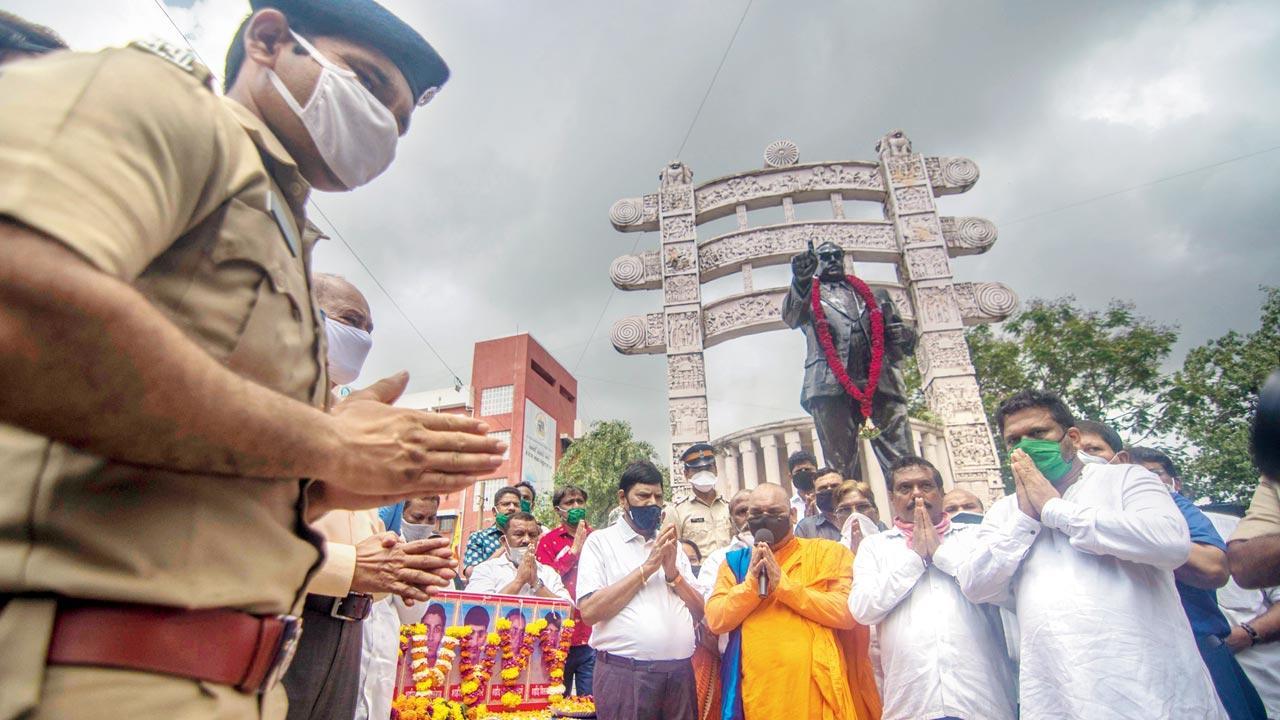
1990s saw regularity of violence directed at Dalits. Firing at Ramabai Nagar in Ghatkopar left 10 dead. It made Juned Shaikh realise caste violence was not just a feature of rural India. File photo from 2020. Pic/Getty Images
In Mumbai, class differences are stark. A high-rise abutting a slum, a swimming pool within shouting distance of a swollen drain, and the homeless taking shelter outside a five-star hotel, are everyday sights. As a land of opportunity and challenges, it has continued to straddle these contrasts for over a century. Rarely ever, though, have we seen the megalopolis through the prism of caste.
In a new book, Juned Shaikh, associate professor of history at the University of California, Santa Cruz, examines why our view of Mumbai as a city of haves
and have-nots alone, could be a narrow one.
Trending Stories
Latest Photos
Latest Videos
Latest Web Stories
ADVERTISEMENT
Mid-Day Fast
ADVERTISEMENT