Home / Sunday-mid-day / Article /
Clogged, dark and dangerous
Updated On: 20 March, 2022 07:10 AM IST | Mumbai | Jane Borges
A first-of-its-kind audit of toilets used by nomadic and denotified tribes in the Thane district conducted last month reveals that Swachh Bharat is a long way off





Pics/Sameer Markande
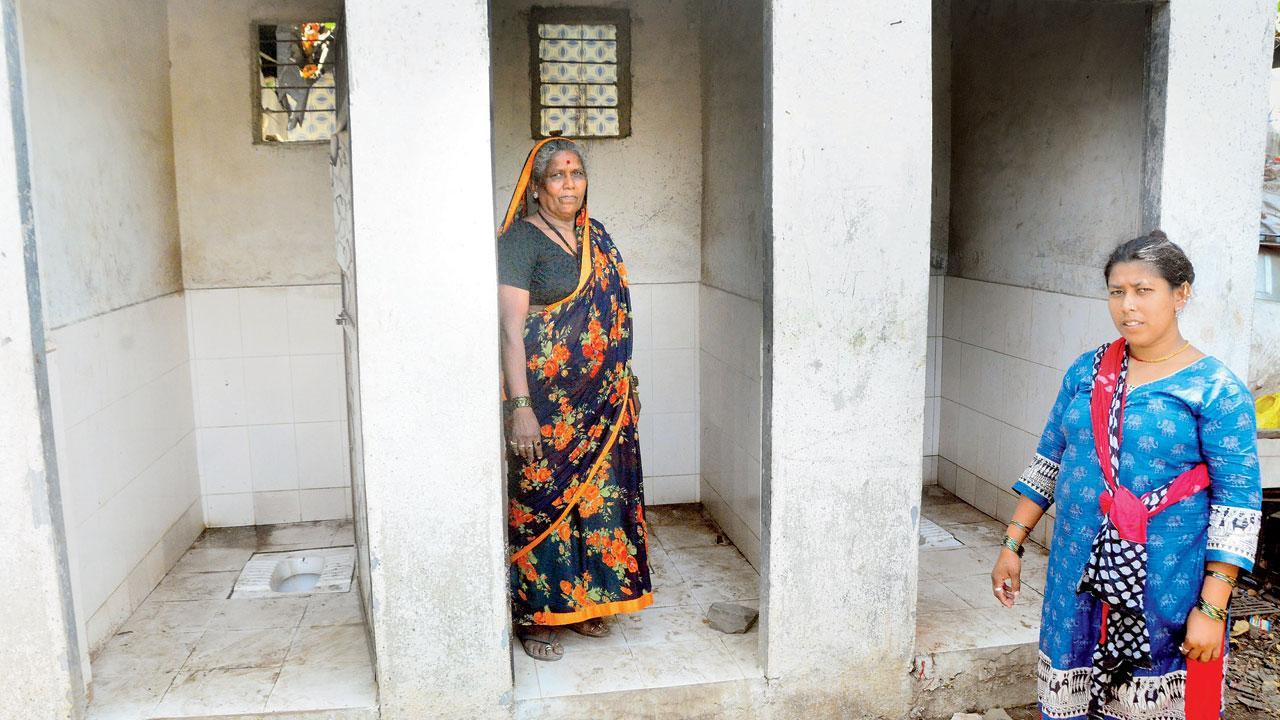
Image caption: Bhangari Ratan Jadhav, a rag-picker, who lives in Lasoonwadi, Shirgaon in Badlapur, says that a local politician built three toilets for the community two years ago. With nobody to maintain them, they are now falling into disuse. “The doors are broken. If we enter we need to place a stone to hold the door. Even then, men try and enter while we are inside,” says the elderly woman.
For the first 30 years of her life, Deepa Pawar lived in a slum in Sewri. As founder of Anubhuti, which is perhaps the only intersectional feminist organisation led by a woman from a nomadic community, Pawar has often dipped into her lived experiences from that time to raise issues of rights and rehabilitation for her people. A grim memory from then that stayed with her, was access to toilets. Once while in Class IX, she remembers inviting a friend over from school to her 8-by-10-foot kutcha home that she shared with four sisters and mother. Pawar had pasted a schedule chart of her day on one of the walls. When her friend read it, he couldn’t help but laugh. His chart listed activities like sports and tuition, while Pawar had put aside one-and-a-half hours against “toilet”. She recalls feeling awkward then, but “that was my reality”.
Trending Stories
Latest Photos
Latest Videos
Latest Web Stories
ADVERTISEMENT
Mid-Day Fast
ADVERTISEMENT