Home / Sunday-mid-day / Article /
Here's how daily commute is turning nightmare for non-essential workers
Updated On: 09 August, 2020 07:52 AM IST | Mumbai | Anju Maskeri
Mid Day Short Description





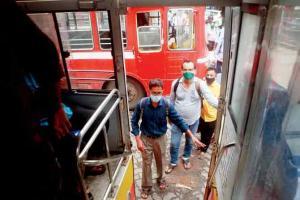
Dinesh Safare, 52, boards a state transport bus at Nariman Point that will ferry him to Virar. Pic/ Ashish Raje
Regardless of how long he's up the previous night, Dinesh Safare, 52, has to be out of bed at the crack of dawn. The Virar resident is an ancillary worker at a private bank in Colaba and is expected to report to work by 9.30 am. Every morning, he boards a state transport bus from Pushpa Nagar that ferries him to Mantralaya. From there, he hops on to another BEST bus that drops him of at Colaba. "I have to be at the depot by 6 am if I have to avoid peak hour traffic. But, buses are unreliable, so, no matter how early you get to the stop, there's no guarantee that you will stick to schedule." If he's not among the first 40 passengers that the vehicle can accommodate, Safare walks into office around 11 am, way past his in-time.
Last month, as many as 250 non-essential workers staged a protest at Nalasopara railway station, demanding that they be allowed to travel in local trains to reach their workplace. Presently, the city's train services are restricted to accommodate essential workers, which according to the Maharahstra government's directives, include medical staff, municipal workers and policemen, among other limited categories. Safare says that although his bank has issued a letter to the railway authorities and applied for a QR code, they are yet to hear back. Under the new system, identity cards with QR codes will be provided to government employees to regulate the entry of passengers into stations.
Trending Stories
Latest Photos
Latest Videos
Latest Web Stories
ADVERTISEMENT

Ganeshotsav 2026

ADVERTISEMENT