Home / Sunday-mid-day / Article /
This new book sheds light on banned literature from colonial India
Updated On: 12 March, 2023 12:08 PM IST | Mumbai | Sucheta Chakraborty
A new anthology of banned literature from colonial India draws attention to print technology and the practices of reading and writing as weapons of war against the colonial administration





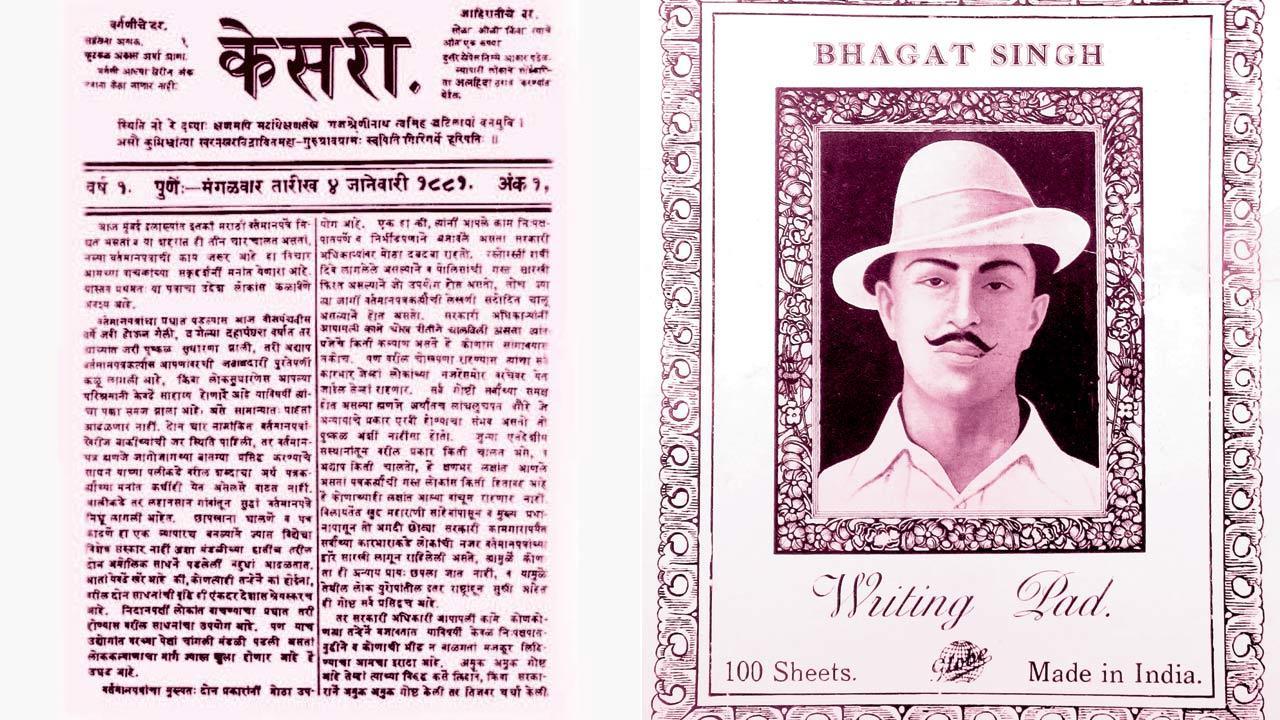
The front page of Tilak’s Kesari, January 1881 and a banned Bhagat Singh writing pad
As a historian, I am sensitive to anniversaries of important events, and to techniques and of commemoration… India’s 75th year of independence was definitely on my mind when I selected the 75 pieces,” Dr Devika Sethi, assistant professor at the School of Humanities and Social Sciences at the Indian Institute of Technology Mandi, tells us over an email interview. Banned & Censored: What the British Raj Didn’t Want Us to Read (Roli Books, R1,295), her new book, is a wide-ranging anthology of banned literature from colonial India whose 75 texts she has selected and introduced.
While the landmark academic history of censorship in colonial India was published in 1974 by American historian N Gerald Barrier and there have been other anthologies of banned literature associated with Bhagat Singh and proscribed patriotic poetry, Sethi explains that what sets this title apart is its collection of “banned poetry and prose from books, pamphlets, posters, newspapers, journals and even a dhoti!” Selecting material deemed “seditious” rather than “obscene” or “hate” speech, illuminating seminal moments and themes from Indians’ anti-colonial struggle in the 20th century, and balancing writings by famous nationalists of all political persuasions with those by “ordinary” Indians reluctant even to be identified with their own texts for fear of reprisal were some of the decisions that drove the selection.
Trending Stories
Latest Photos
Latest Videos
Latest Web Stories
ADVERTISEMENT

Ganeshotsav 2026

ADVERTISEMENT