






Home / Sunday-mid-day / / Article /
'Fadnavis didn't realise Maharashtra voted for Modi'
Updated On: 01 December, 2019 08:32 AM IST | Mumbai | Jane Borges
Senior journalist Rajdeep Sardesai, who examines BJP's sweeping victory in the 2019 elections in a new book, deliberates on the cult of Modi and why the party is not invincible as is evident in Maharashtra

Listen to this article :
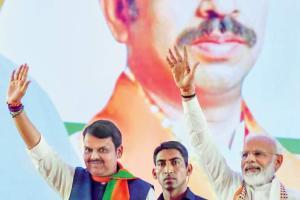
Narendra Modi gestures with then chief minister of Maharashtra Devendra Fadnavis at a public rally in the run-up to the Maharashtra state assembly elections, in Mumbai on October 18, 2019. Pic/Getty Images
The day we speak with journalist-author Rajdeep Sardesai, Devendra Fadnavis is to announce his resignation as chief minister of Maharashtra, just three days after he took oath. The evening ahead is going to be a busy one in the television newsroom he heads in Delhi, but he doesn't know that yet. It doesn't mean, Sardesai, is not prepared. We are discussing his new book, 2019: How Modi Won India (HarperCollins India)—a sequel to The Election That Changed India, which examined the 2014 Lok Sabha elections—but his thoughts continue to be occupied with the ongoing tragicomedy-of-a-power-shuffle in Maharashtra.
"In 2014, the PM said, 'Na khaoonga, na khaane doonga'. But in Maharashtra, his party attempted to tie up with people, who he had accused of corruption," Sardesai says early in the telephonic interview. "Five years ago, there was an uncritical attitude towards [Narendra] Modi. I think finally, questions are being asked and we might be coming out of the grip of the Modi cult. Yes, he is still India's neta no. 1. He is still the dominant figure who towers above all else in our consciousness, much like Amitabh Bachchan did in Bollywood in the late 1970s. However, just like Amitabh's films began to lose their box office appeal, slowly, with time, Mr Modi's appeal may get diluted."
Read Next Story
Trending Stories
Latest Photos
Latest Videos
Latest Web Stories
ADVERTISEMENT
Mid-Day Fast
ADVERTISEMENT

ADVERTISEMENT