






Home / Sunday-mid-day / / Article /
Dive into the works of Badri Narayan and Vitrum Studio at this art exhibition
Updated On: 22 June, 2025 10:18 AM IST | Mumbai | Ela Das
How a Polish emigre, a quiet visionary, and ceramic tiles shaped an overlooked chapter in Indian modern art

Listen to this article :
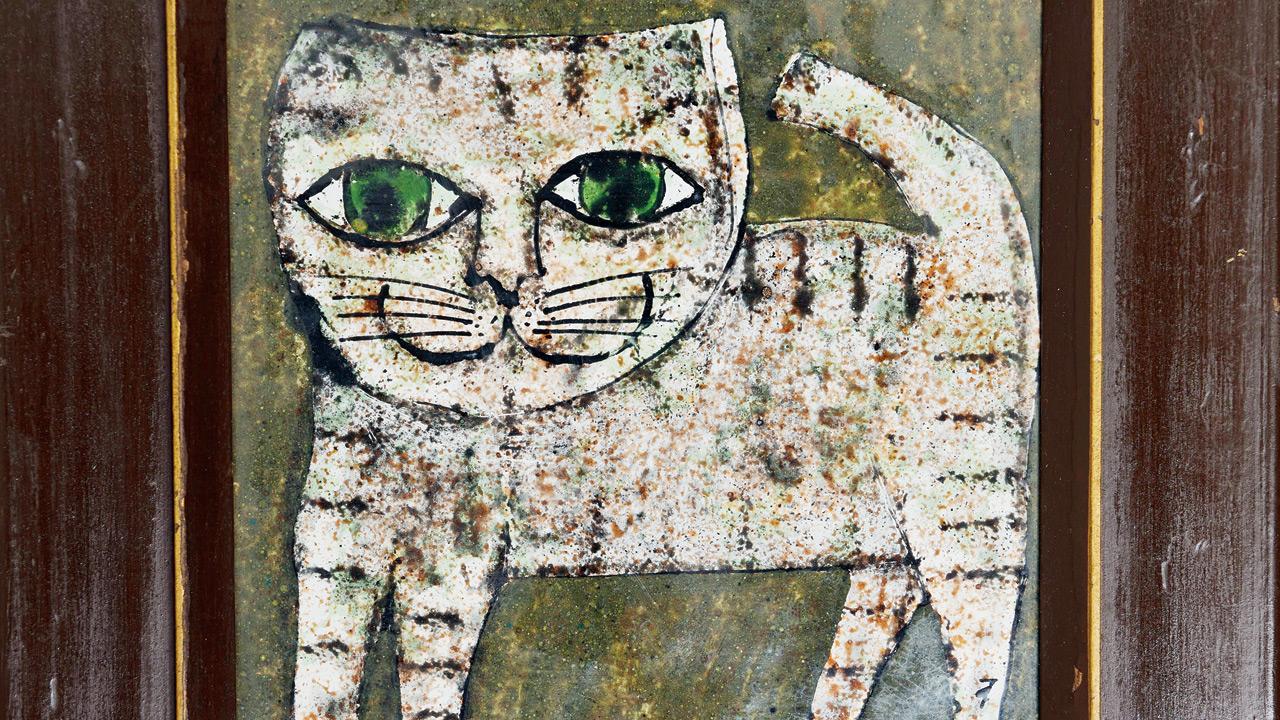
A painting by Badri Narayan from the Haresh Mehta collection
It started, as many stories do, with a chance encounter. Curator Puja Vaish was browsing the Jehangir Nicholson Art Foundation’s collection when she came across ceramic works by artist Vijoo Sadwelkar — rare survivors from a near-forgotten studio called Vitrum. But it wasn’t until she met Haresh Mehta, heir to the family that had once run the studio, that the missing pieces began to come together — quite literally. Mehta had preserved an astonishing number of original works, and suddenly, a full exhibition didn’t just feel possible — it felt necessary.
On view at the JNAF Gallery at CSMVS Museum, A Glazed History: Badri Narayan & the Vitrum Studio is the first retrospective to showcase this lost fragment of post-Independence Indian art history. Running from the 1950s to the 1970s, Vitrum was a studio that blurred the lines between art, craft, and design, inviting artists to experiment with hand-painted ceramic tiles and Venetian glass mosaics — not for elite collectors, but for the everyday home. Founded by emigre glass expert Simon Lifschutz and his wife Hanna, the studio operated out of Mumbai’s Kemps Corner and later became a crucible for artistic cross-pollination.

A Vijoo Sadwelkar work, from the Pheroza Godrej collection
Trending Stories
Latest Photos
Latest Videos
Latest Web Stories
ADVERTISEMENT
Mid-Day Fast
ADVERTISEMENT

ADVERTISEMENT