Home / Sunday-mid-day / Article /
'Faith and feminism can co-exist'
Updated On: 29 September, 2021 05:55 PM IST | Mumbai | Meher Marfatia
A few homes of Hatkesh Society in Juhu celebrate Navratri with the unique 'sitting garba' which is sung, not danced, by women of the Nagar community citywide





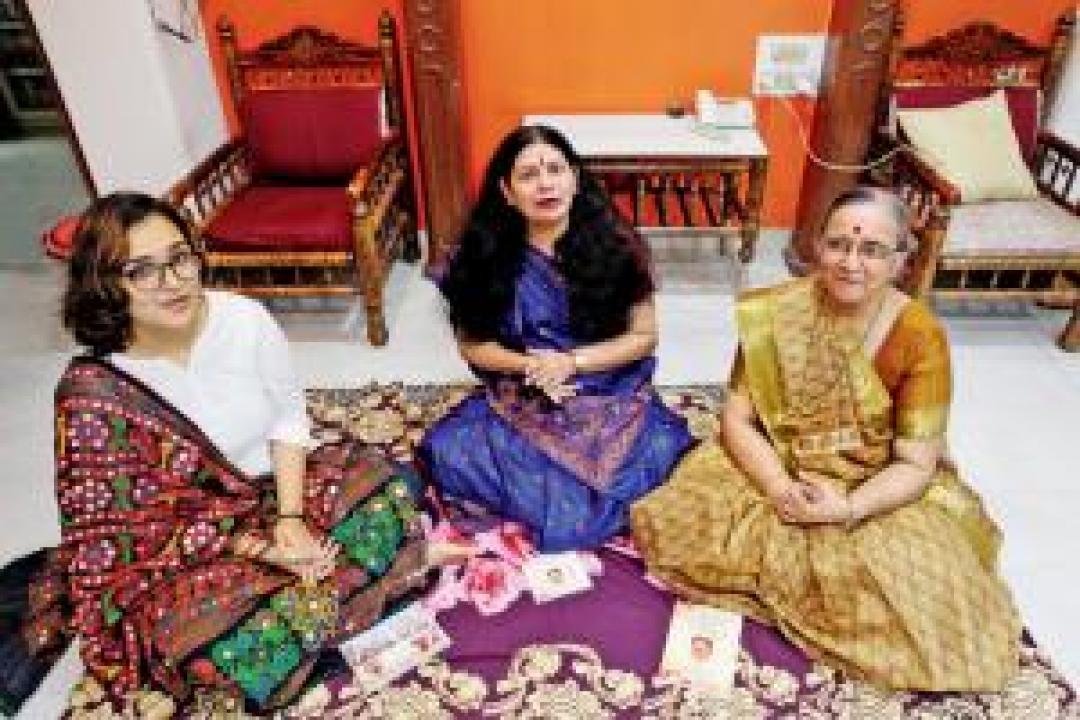
Sulekha Baxi (extreme right) sings a betha garba sitting with her granddaughter Anjali and Dr Rajshree Trivedi (centre). Pic/ Ashish Raje
 Our hashtag is Jai Hatkesh!" says 85-year-old Dr Datta Rana spiritedly, handing me a glass of chilled khus doodh. We are soon joined by Naliniben Pandya, her neighbour in Juhu's Hatkesh Society. They are Nagar (pronounced Naagar) Gujaratis.
Amid all the colour and chaos, the din of dandiya and dhol of Navratri, these women will thrill to an unusual beat. The vocal strains of the semi-classical "sitting garba" unique to the Nagar community.
Rather than swirl dance the "farta (whirling) garba", Nagar singers who practise "betha (sitting) garba" gather in a different home daily between 3 pm and 5 pm through Navratri. Their songs invite Mataji, the mother goddess descending from heaven to bless her earthly devotees. These lyrics flow in a smooth relay of unimaginable grace. The instant one woman nears a closing antaro (stanza) of a garba, the next picks up with opening notes of hers.
While this cadenced singsong echoes in Nagar pockets across town, it is the ladies of Hatkesh Society—Hatkesh is a name hailing Lord Shiva—that I'm privileged to hear. "Ameh vadhaareh Saraswati na pujari," declares Dr Rana. "We are more worshippers of Saraswati, goddess of learning. Be with her and Laxmi trails (with wealth). Each afternoon begins with a garba praising Mataji, performed by the lady of the house, followed by an aarti and simple prasad distributed like dry fruit or sharbat."
Trending Stories
Latest Photos
Latest Videos
Latest Web Stories
ADVERTISEMENT

Ganeshotsav 2026

ADVERTISEMENT