









Home / Sunday-mid-day / / Article /
'Fighting casteism alone can come at a grave personal cost'
Updated On: 09 July, 2023 11:46 AM IST | Mumbai | Alisha Vaswani
Oxford law scholar Asang Wankhede, who has roots in the Dalit ghettos of Nagpur, talks about his open-to-all online resource that’s helping marginalised students fighting institutional casteism

Listen to this article :
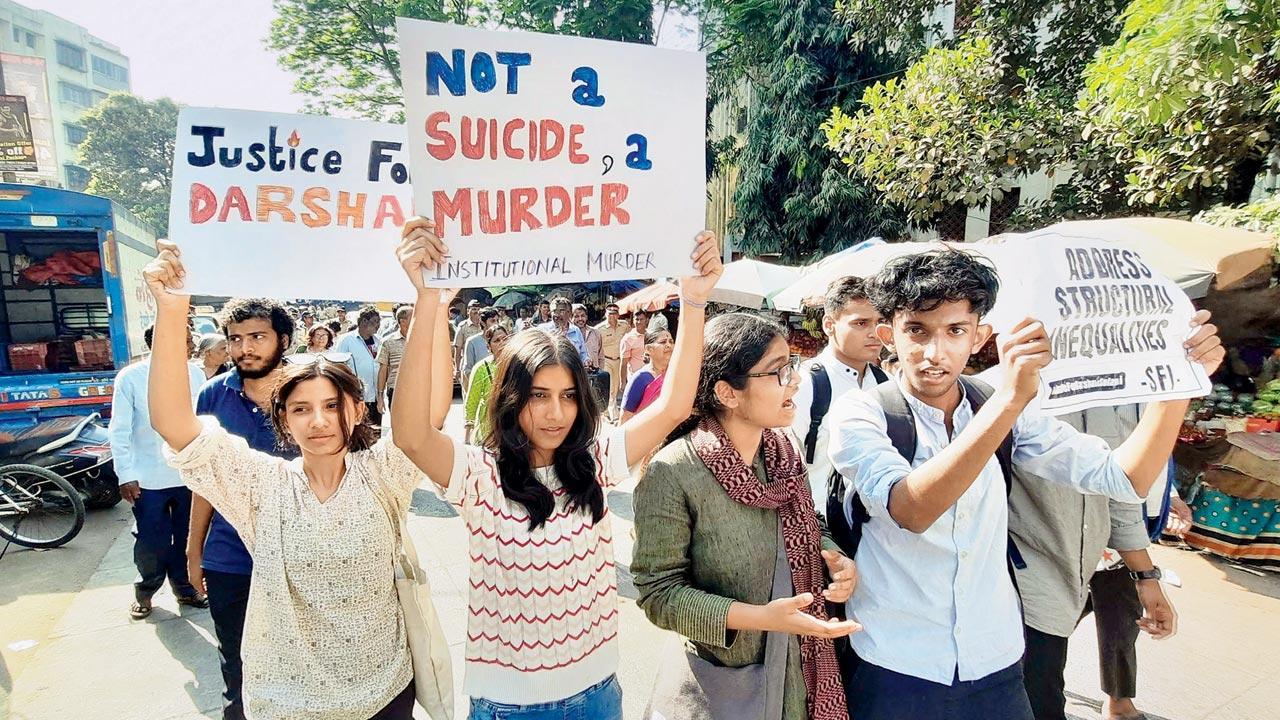
Students hold a protest following the suicide of Darshan Solanki, who allegedly jumped off the eighth floor of his IIT-B hostel earlier this year. His parents alleged that a fellow student had harrassed me on the ground of his caste
On Asang Wankhede’s first day at the National Law University (NLU), Delhi, in 2011, he discovered that he had been allotted caste-segregated housing. Now, a scholar of the University of Oxford working towards a PhD in law, Wankhede uses his legal expertise to make students like himself aware of their rights.
The 30-year old is behind the recently-launched open-to-all resource project that students experiencing caste discrimination can use to hold their university accountable. “I lived in a Dalit-dominated slum colony in Nagpur,” he tells mid-day over the phone from the UK, “and was placed in the ‘reservation’ wing of the student housing complex. My activism over the next few years made sure this changed, but discrimination continued at
the university.”
Wankhede created this simple online folder after he received messages from students who, though confident of their abilities claimed to be systematically belittled by faculty. “They tell me that they are constantly downgraded in internal assessments when compared to their peers with equal abilities.” Given that in his first week at NLU, a professor spoke openly against India’s reservation policy, and questioned the merit of Dalit students before a class of 80, Wankhede knows what that feels like.
Trending Stories
Latest Photos
Latest Videos
Latest Web Stories
ADVERTISEMENT
Mid-Day Fast
ADVERTISEMENT

ADVERTISEMENT