Home / Sunday-mid-day / Article /
From hundi to elastic
Updated On: 07 March, 2021 10:36 AM IST | Mumbai | Jane Borges
A former central banker’s new book explores the historical and socio-cultural legacy of paper currency in India





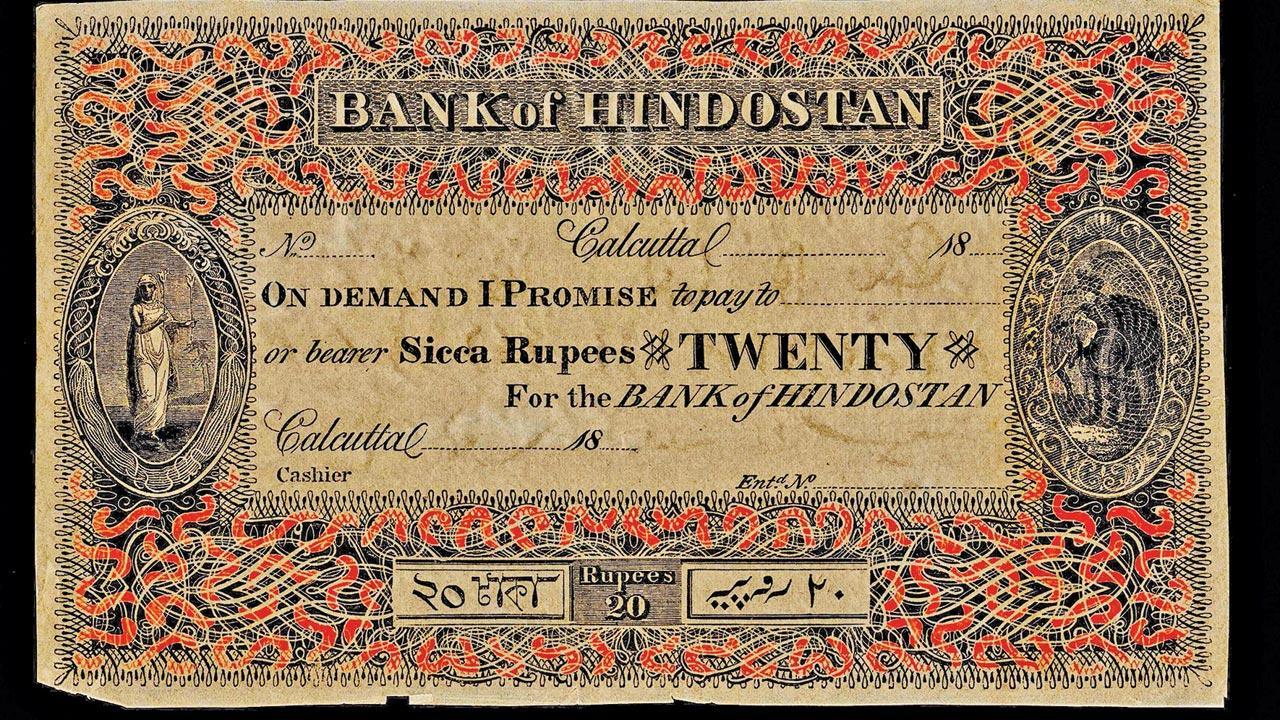
A specimen note of 20 sicca rupees issued by the Bank of Hindostan, printed in dark brown, with red and black. Pic courtesy/Rezwan Razack
Long before paper money became accepted currency in the Indian sub-continent, “hundies” were the norm. These “versatile paper documents”—the use of which began during medieval times—served either as promissory notes to borrow and lend money, or as trade bills to facilitate sale of goods, and as remittance instruments to transfer funds from one place to another. “However, they were specific in their usage and purposes. While they were transferable, they were not designed to circulate amongst the public and were used by a closed community of Indian bankers, merchants, governments and others initiated in methods of finance,” says Bazil Shaikh, author and former central banker, who headed the team that conceived, researched and curated the RBI Monetary Museum in Mumbai.
His new book, The Conjuror’s Trick: An Interpretive History of Paper Money in India (Marg Publications), is a deep dive into the socio-cultural legacy of paper currency, offering insights into how it evolved—in nature, design and value—first during the colonial rule and later, in post-Independent India.
Trending Stories
Latest Photos
Latest Videos
Latest Web Stories
ADVERTISEMENT
Mid-Day Fast
ADVERTISEMENT