Home / Sunday-mid-day / Article /
Gehri saans le for diabetes
Updated On: 19 November, 2023 07:40 AM IST | Mumbai | Neerja Deodhar
A landmark study reveals the startling and direct connection between polluted air and insulin resistance, which messes with the autonomic nervous system and leads to future cardiovascular diseases





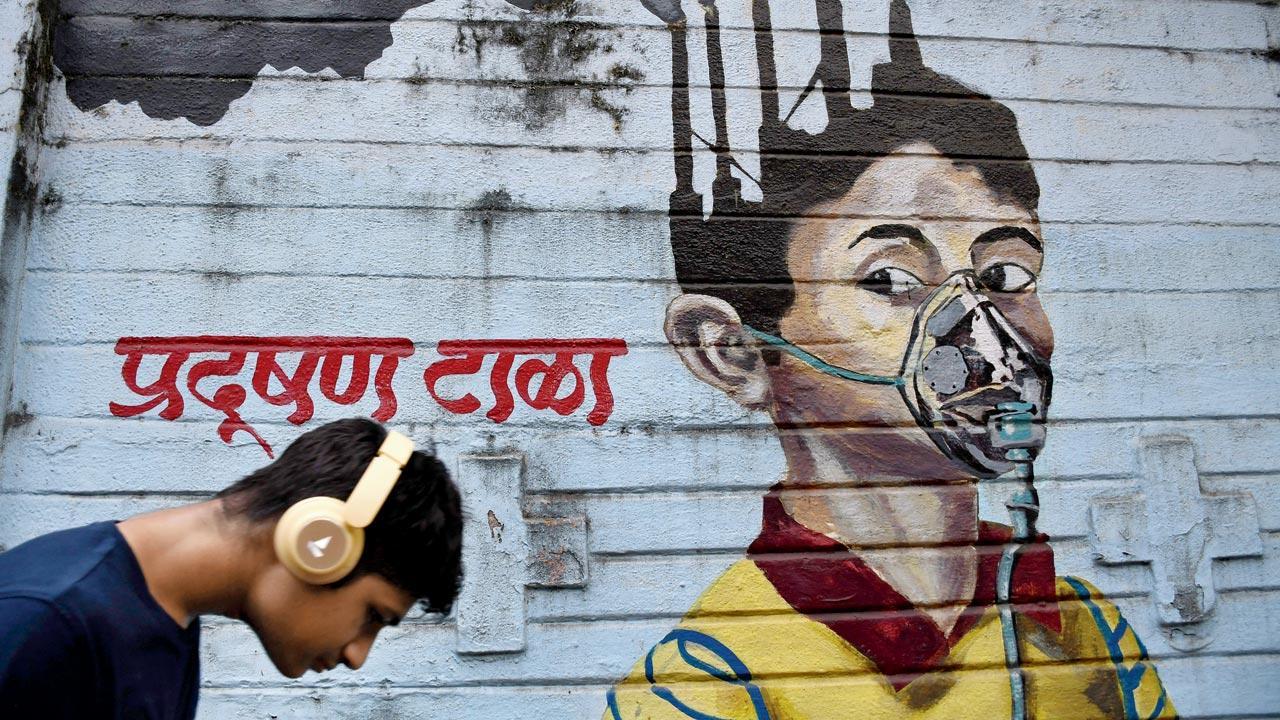
A Mumbaikar walks past prophetic wall art earlier this month. Post Diwali, the System of Air Quality and Weather Forecasting And Research (SAFAR-India) recorded the overall AQI for the city at 234 or ‘poor’. Pic/Getty Images
On the subject of chronic or lifelong diseases, most Indians are aware of diabetes’ hold on the population—per the World Health Organisation (WHO) numbers, 77 million people above the age of 18 have Type 2 diabetes. Previously called Adult Onset Diabetes, it refers to high blood sugar or glucose and insulin resistance. Many households are home to people living with and managing the disease with medication and lifestyle changes, or know of a close relative who is. Perhaps what is lesser-known and equally worrying is that 25 million Indians are reportedly pre-diabetic or at risk of developing the disease in the future—people who could benefit greatly from timely medical intervention.
A new landmark study highlights what many care providers have estimated in the last few years about the influence of factors in the very environment we live in: exposure to air pollution, that is, particulate matter, affects your blood glucose and is linked to incidence of Type 2 diabetes.
Trending Stories
Latest Photos
Latest Videos
Latest Web Stories
ADVERTISEMENT
Mid-Day Fast
ADVERTISEMENT