Home / Sunday-mid-day / Article /
Give your dog a bone…
Updated On: 19 November, 2023 08:20 AM IST | Mumbai | Mitali Parekh
…and many meats, eggs, veggies, fruits, organs and claws, say pet nutritionists, instead of sterile and nutrition-less packaged food, if you want them to live long





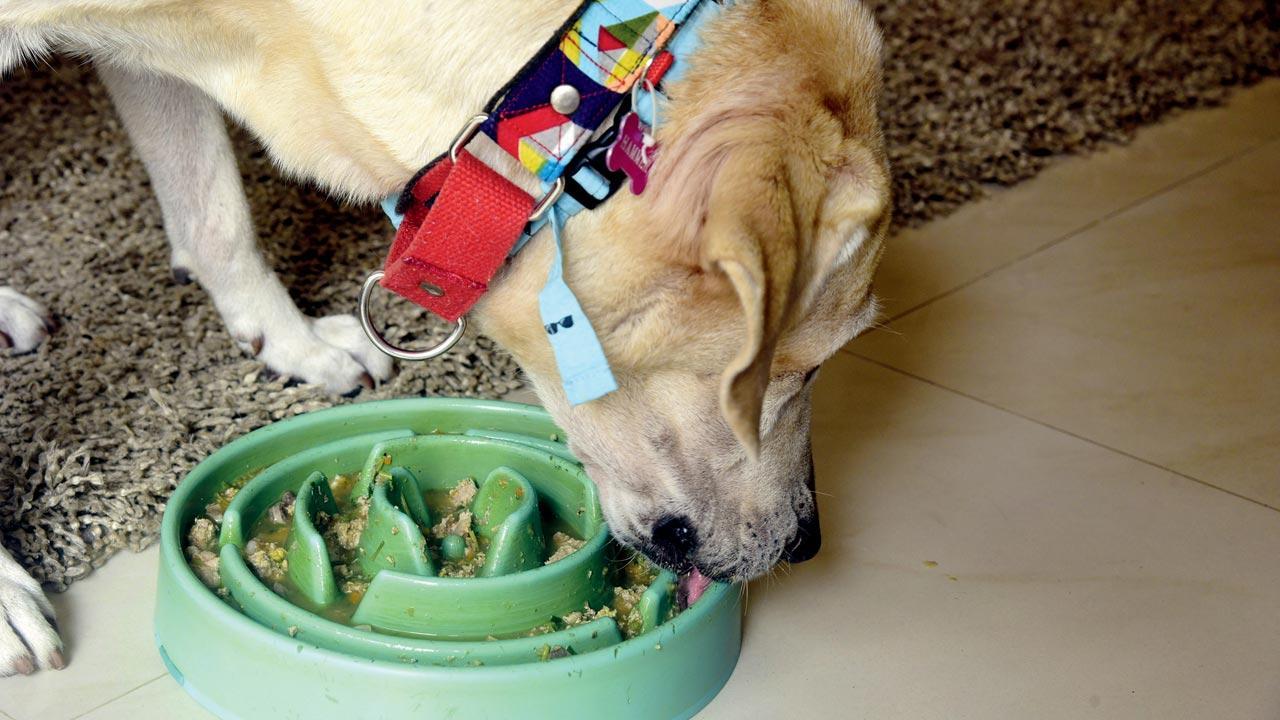
After a consistent high creatinine level scare, nine-year-old Hammer shifted to a diet whose bulk is meats of various animals and their organs. Pics/Atul Kamble
Gabbar Singh’s daily bowl of food has a large chunk of uncooked animal protein and organs on rotation, all sourced directly from a halal butcher: Duck, quail, goat, buffalo, chicken, or pork. It’s supplemented with some fish: sardine, anchovies or ravas. “Norwegian salmon on his birthday,” informs the Alsation’s parent Adrija Majethia, “or rabbit or emu. Lately, he’s developed a taste for kangaroo, venison and veal. My brother gets dehydrated chunks or jerkies of these when he visits from Australia.” There are brains, gizzards, liver, kidney, lungs, oesophagus, eyeballs and hearts from these animals too.
That’s just the main component of the meal—with it comes a gravy of red or green soup (made from vegetables of that general colour) with pepper and turmeric; occasionally, bone broth, a dash of fermented vegetables or sauerkraut, toppers such as algae, spirulina; duck, chicken or quail eggs, a teaspoon rotation of oils such as coconut (cold-pressed and organic, of course), flaxseed, pumpkin seeds, salmon, sardine, olive; chia seeds, berries. Ice-cream, kharvas and paneer—his favourites—to coax him for a difficult task. “His carb content comes from doggie biscuits he eats throughout the day; and he loves his ghee-wali rotli,” says the Matunga resident.
Trending Stories
Latest Photos
Latest Videos
Latest Web Stories
ADVERTISEMENT

Ganeshotsav 2026

ADVERTISEMENT