Home / Sunday-mid-day / Article /
This musical performance is a tribute to Tawaifs, the skilled courtesans of yore
Updated On: 05 March, 2023 10:45 AM IST | Mumbai | Kasturi Gadge
A musical ensemble pays tribute to the art of tawaifs, tracing Indian classical music from the kothas of yore





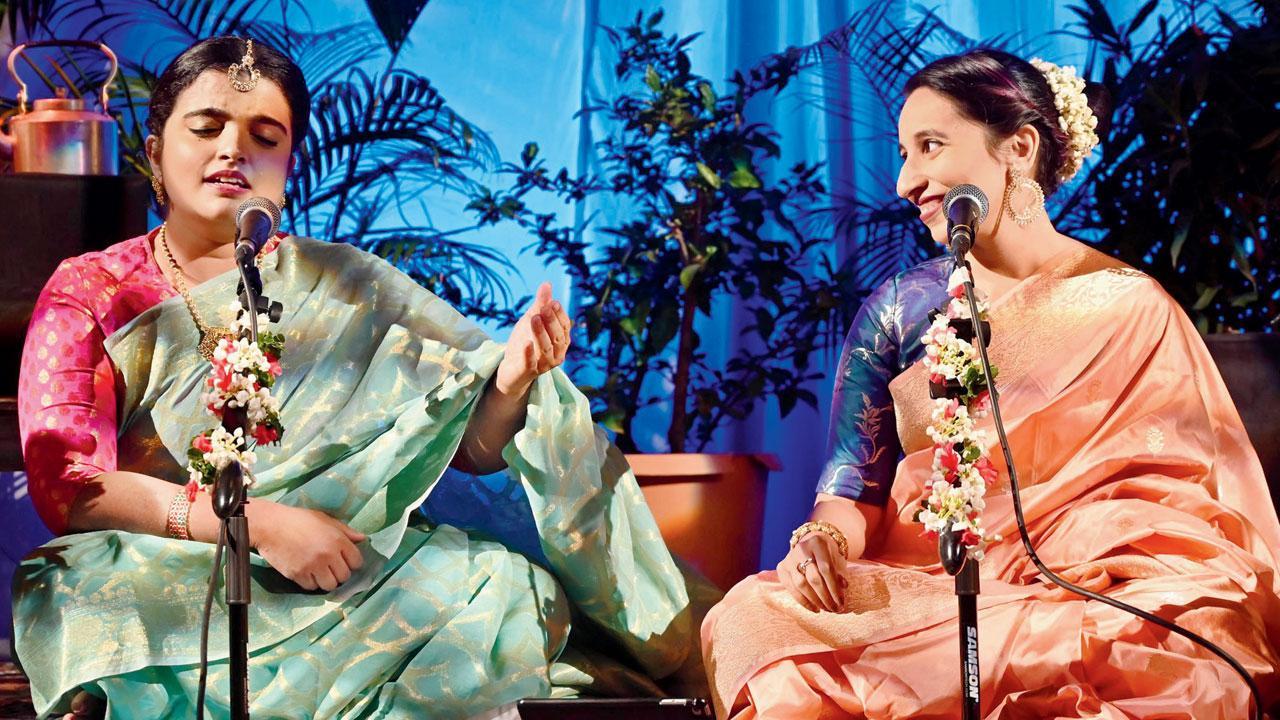
(Right) Avanti Patel and Rutuja Lad performing O Gaanewali at NCPA last year
Did you know that many of the tawaifs (courtesans), who regaled aristocrats, soldiers and well-to-do people of the society with their soulful music, graceful dance and role in transference of culture to many Hindustani homes, had also a pertinent role to play in the freedom struggle? Around the time freedom fighters were levelling up against the mighty British Raj, these courtesans turned their homes, which were then called kothas, into safe havens for brave Indian men to take refuge in, until they could reappear on the movement’s scene. But their contribution largely went unnoticed. Now a musical ensemble, O Gaanewali, is doing its two-bits to bring back focus on the contributions made by these yesteryear artistes on the dance, music and cultural scene of the Southeast-Asian society.
“The role of the tawaifs in the freedom struggle has been almost wiped off from our history books,” rues Avanti Patel, a Hindustani classical and semi-classical vocalist, composer and playback singer. She adds that even “the art aspect of their lives has been maligned and reduced to what society deems is uncouth”. This mehfil will then give audience a taste of thumri, dadra, hori, jhoola, chaiti and ghazals, as an ode to the forgotten songstresses—Gauhar Jaan, Janakibai, Raasoolan Bai and Begum Akhtar.
Trending Stories
Latest Photos
Latest Videos
Latest Web Stories
ADVERTISEMENT

Ganeshotsav 2026

ADVERTISEMENT