






Home / Sunday-mid-day / / Article /
He was an Indian music missionary
Updated On: 02 August, 2020 07:46 AM IST | Mumbai | Jane Borges
"In his second tryst with Pandit Ravi Shankars story, biographer Oliver Craske delves into the legendary sitarists life to understand what influenced his music-making "

Listen to this article :
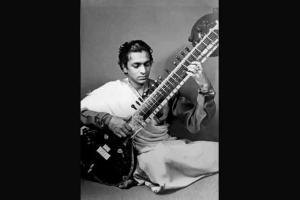
Pandit Ravi Shankar plays his Kanai Lal sitar in the 1940s. Pic courtesy /Shankar family
Writer Oliver Craske might as well call himself the chosen one. Penning sitar maestro Pandit Ravi Shankar's biography wasn't something he saw himself doing, especially since he had collaborated on Raga Mala, the second autobiography by the veteran in the late 1990s. "When I first met him, I was only 23," recalls London-based Craske. "My role was to assist him with the book. But I spent a lot of time with him, sitting down and going through the drafts and manuscripts. Occasionally, he'd toss in a comment like, 'Oh! That can come out later.' At that point, Raviji didn't have any fixed plan. But it was as if I was being assigned a role, without asking for it. Like there were seeds being planted for later."
Soon after Shankar passed on in 2012, Craske felt the need to write his biography. "I had thought about it for many years [before that], but I slightly resisted the idea, internally. I think I wasn't ready." A conversation with Shankar's second wife and mother to sitarist Anoushka, Sukanya Rajan, who was still in mourning then, made him realise he was destined for the role. "I remember ringing Sukanya up, and decided to ask her what she thought about my idea of writing a biography. It was funny, because, even before I got the words out, she said to me, 'You should write something more about him.' It made absolute sense."
Read Next Story
Trending Stories
Latest Photos
Latest Videos
Latest Web Stories
ADVERTISEMENT
Mid-Day Fast
ADVERTISEMENT

ADVERTISEMENT