






Home / Sunday-mid-day / / Article /
Here's what Maharashtra can learn from Kerala's COVID-19 failure
Updated On: 21 February, 2021 08:48 AM IST | Mumbai | Prutha Bhosle
Experts discuss how a state once touted as a model in the COVID-19 fight, has now become a “failed state”, and what lessons Maharashtra can learn from these mistakes

Listen to this article :
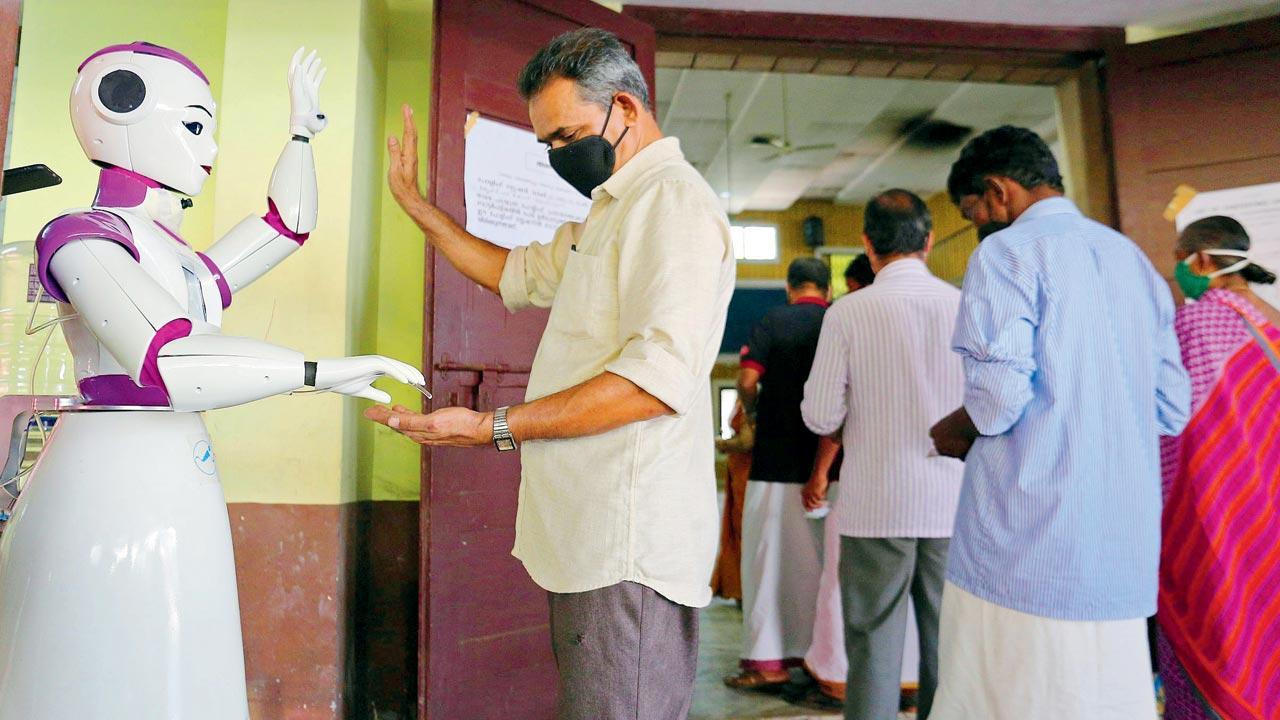
A robot dispenses sanitiser as a preventive measure against Coronavirus to a voter at a polling station in Kochi on December 10 last year. Pic/Getty Images
COVID-19 was declared as a “Public Health Emergency of International Concern” by the World Health Organization (WHO) on January 30 last year. That same day, Kerala became the first state in India to be affected by the virus, with the first novel Coronavirus case confirmed in Thrissur district. By early March, the state had the highest number of active cases in India, mainly due to a huge number of cases imported from other countries and states. All eyes were on KK Shailaja, Kerala’s health minister, who was earlier involved in the successful containment of the Nipah virus outbreak in 2018. Would she become a Coronavirus slayer, too?
Fortunately, even before COVID-19 became a household name across the world, Shailaja had been keeping tabs on the reported cases in Wuhan, China, the epicentre of the disease. Even as the COVID-19 pandemic exposed the dearth of leadership in fighting against the infection, Shailaja’s foresight in preparing the state gained global attention. Using the five components of trace, quarantine, test, isolate and treat, by June 10, 2020, Kerala had managed to flatten the curve.
Read Next Story
Trending Stories
Latest Photos
Latest Videos
Latest Web Stories
ADVERTISEMENT
Mid-Day Fast
ADVERTISEMENT

ADVERTISEMENT