Home / Sunday-mid-day / Article /
Diwali Ank: How festive editions are fighting new-age content creators
Updated On: 05 November, 2023 03:39 AM IST | Mumbai | Arpika Bhosale
It’s that time of the year again when the Diwali ank occupies the imagination of the Marathi reader. How are these legacy festive editions fighting new-age content creators, advertiser dominance and a fickle audience?





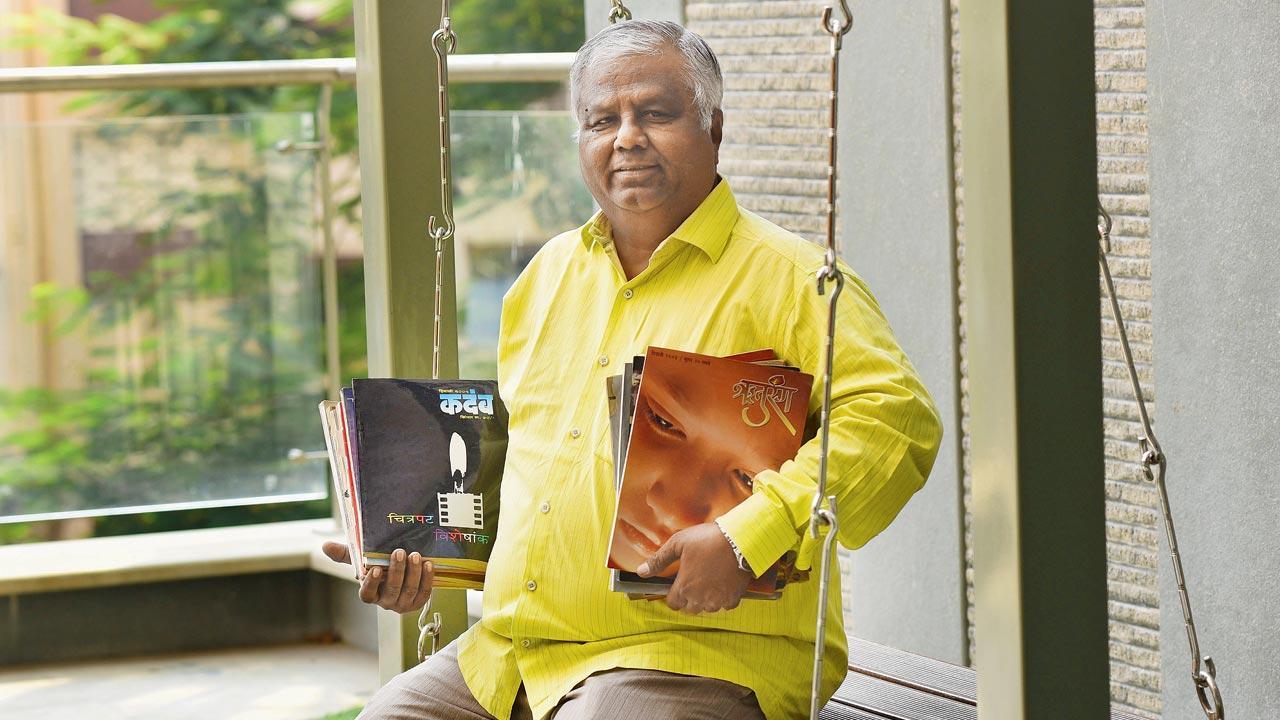
Retired government employee Pankaj Kulkarni has been collecting Diwali anks since 1980. His collection numbers 150. Pics/Nimesh Dave
The newspaper stand was a punctum of excitement ahead of Diwali for Mukund Kule. Together with his little friends, Kule would crowd around Girgaon’s neighbourhood magazinewallah to pick up copies of special festive editions of periodicals, known locally as the Diwali ank. The journalist-writer calls the 1980s a high point in the popularity of these editions, when picky and loyal Marathi readers would look forward to the robust special read.
The Diwali ank was published in 1909 and called Manoranjan. It was packed with sections, including one for short stories, another for one-act plays, a few pages were dedicated to poetry, and so on. It was an experiment that piqued the Marathi reader’s curiosity. “The next year, there were a lot more anks, and the story continues to this day. Maharashtra sees anywhere between 300 to 400 Diwali editions every year,” says Kule.
Trending Stories
Latest Photos
Latest Videos
Latest Web Stories
ADVERTISEMENT
Mid-Day Fast
ADVERTISEMENT