







Home / Sunday-mid-day / / Article /
Hum aapke hain coon?
Updated On: 21 July, 2024 07:35 AM IST | Mumbai | Debjani Paul
A raccoon suspected to hail from the US strayed into Palghar last New Year’s Eve and could’ve landed in the lap of traffickers but for animal rights activists. What happens to exotic animals after seizure and what goes into their painstaking rehab?

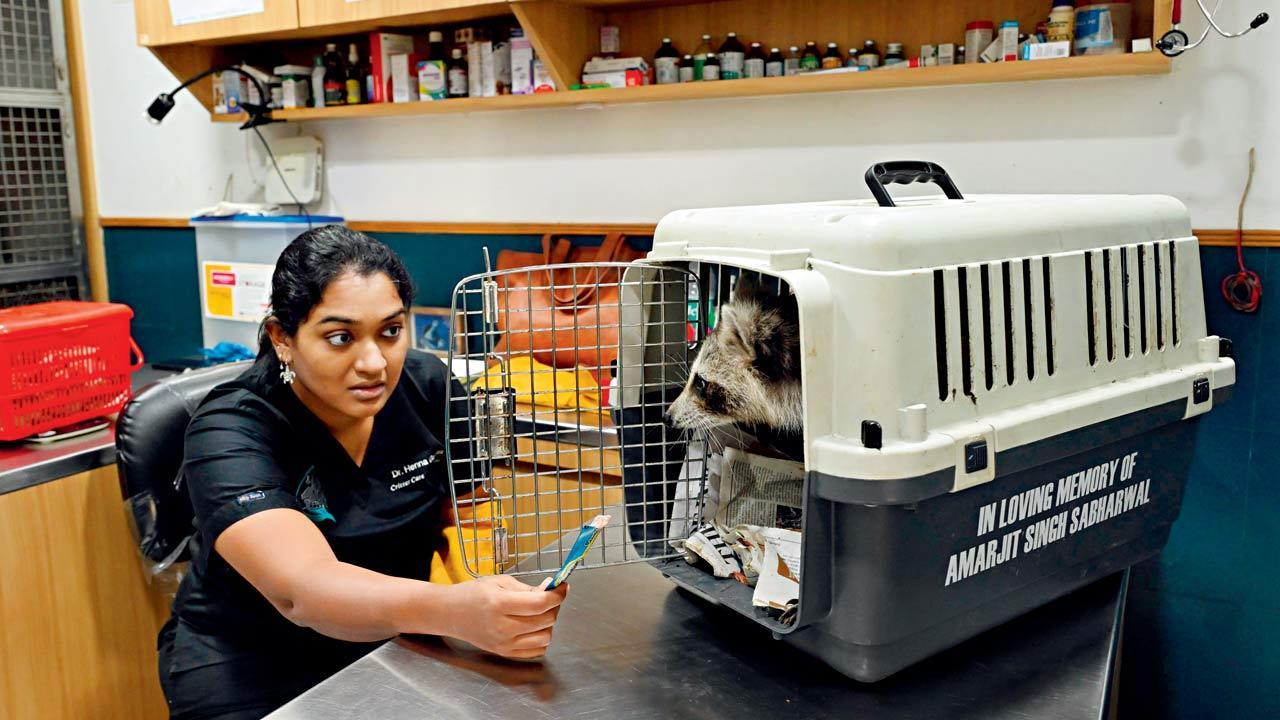
Jimmy, a raccoon rescued from a cargo ship, during a medical examination by Dr Henna Ganjwala at Critter Care veterinary clinic in Andheri West. Pics/Satej Shinde
Jimmy the raccoon doesn’t belong in India. In fact, it looks like he might not belong anywhere. Jimmy landed in Mumbai on New Year’s Eve last year, as a suspected stowaway on a cargo ship ferrying a foreign consignment of tires. “Raccoons are not native to India. When the workers opened the consignment in Palghar, they found an animal inside that they had never seen before. After taking a look, we confirmed that it was a raccoon and took custody of it,” says Ritu Sharma, 29, a volunteer with the NGO RAWW, who has been overseeing the care of the exotic animal at the organisation’s facility on the outskirts of Thane.
Rehabilitating Jimmy has not been an easy task. He had arrived dehydrated and underweight, with tattered fur. Sharma began by taking him to an exotic animals’ vet so he could be stabilised. The next step was figuring out how to feed him in a way that would ensure optimum health and that he does not get dependent on humans for food. All this costs time, effort and money. His care over the past six months alone has cost upwards of R1.8 lakh. These are not exactly things that Sharma, who has a full-time job as a linguist, has in unlimited supply. Neither can she do it forever—there are legal restrictions, and she’d much rather Jimmy have a shot at freedom in the wild one day.
Read Next Story
Trending Stories
Latest Photos
Latest Videos
Latest Web Stories
ADVERTISEMENT
Mid-Day Fast
ADVERTISEMENT

ADVERTISEMENT