Home / Sunday-mid-day / Article /
I feel you
Updated On: 18 July, 2021 09:42 AM IST | Mumbai | Anju Maskeri
If your pet is behaving differently in the pandemic, you may not be alone. Experts say, it’s a mirror effect, with animals absorbing and exhibiting what pet parents are experiencing





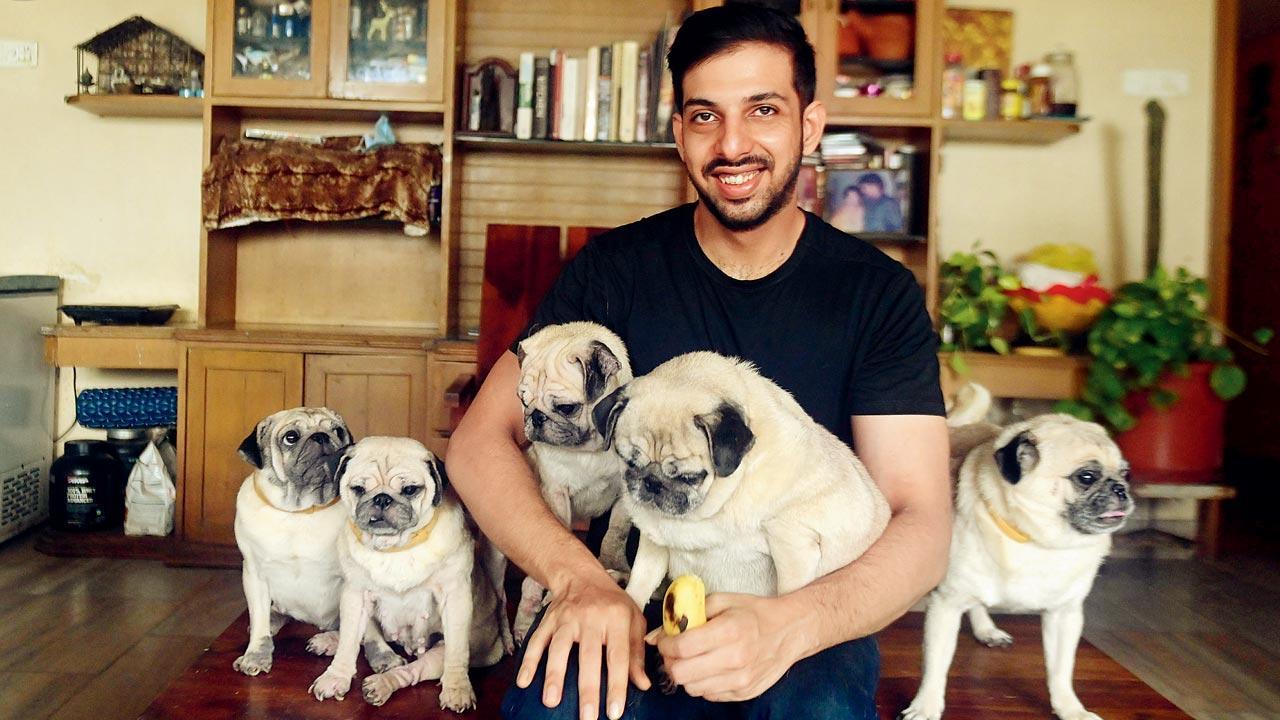
Rushail Navani, co-owner of Cuffe Parade delivery kitchen Masalesque, with his five pugs. He says the pooches had piled on kilos and were restless during the first lockdown in the absence of exercise. Pics/Sameer Markande, Bipin Kokate
At fitness and wellness coach Tabitha Thomas’ Mulund home, visitors are advised to keep away from nine-year-old Tyra, the pet dog. Their felines, Ollie, 2, and 10-month-old Suki, are gregarious and always in the mood to play. “Dogs are known to be innately sociable, but Tyra is not one of them. Because we did not have guests all through the lockdowns, she has become all the more wary of new faces,” says Tabitha, founder and head coach of Zinglee Fit. Her cats, on the other hand, have sorely missed human company. Before the outbreak, Thomas and her husband Sanket would routinely host friends for board game nights. “They [cats] miss having people over so much that they get excited even if a plumber arrives, and rub themselves all over him,” she laughs.
Humans aren’t the only ones who have had to adapt and adjust to new ways of life during the Coronavirus pandemic. Their companion animals, too, have undergone a behavioural transition, observe pet parents. For some, it has meant a change in the way they interact with their families or with others outside the household. Researchers from the Universities of York and Lincoln in the UK surveyed 5,323 people with companion animals, including horses, reptiles, birds, and fish, cats and dogs. The results indicated that over 65 per cent of participants had noticed a change in the behaviour of their pets during the lockdown in 2020. The research, which was published in the International Journal of Environmental Research and Public Health, revealed that about 10 per cent of dog, cat, and horse owners noted their companion animals were unsettled by the changes, but up to 30 per cent found they seemed more relaxed and up to 15 per cent observed that their pets were more energetic and playful. About a third of owners, mostly the pet parents of dogs and cats, noticed that their animal companions followed them around more than usual.
According to Thomas, there was a noticeable change in Ollie during the lockdown. “Pre-pandemic, he would not bother greeting me when I’d get home. In the lockdown, because I was home all day, he grew attached and turned into a lap cat, at least with me. These days, when I get home after my workout sessions, his excitement [to see me] is two-fold.”
Trending Stories
Latest Photos
Latest Videos
Latest Web Stories
ADVERTISEMENT

Ganeshotsav 2026

ADVERTISEMENT