Home / Sunday-mid-day / Article /
‘I wish Parsi children knew the Avestan script exists’
Updated On: 10 March, 2024 07:47 AM IST | Mumbai | Christalle Fernandes
Mumbai’s Zoroastrian-dominated Dadar Parsi Colony played host to an artist and believer who is keeping alive an extinct script through the flourish of her pen





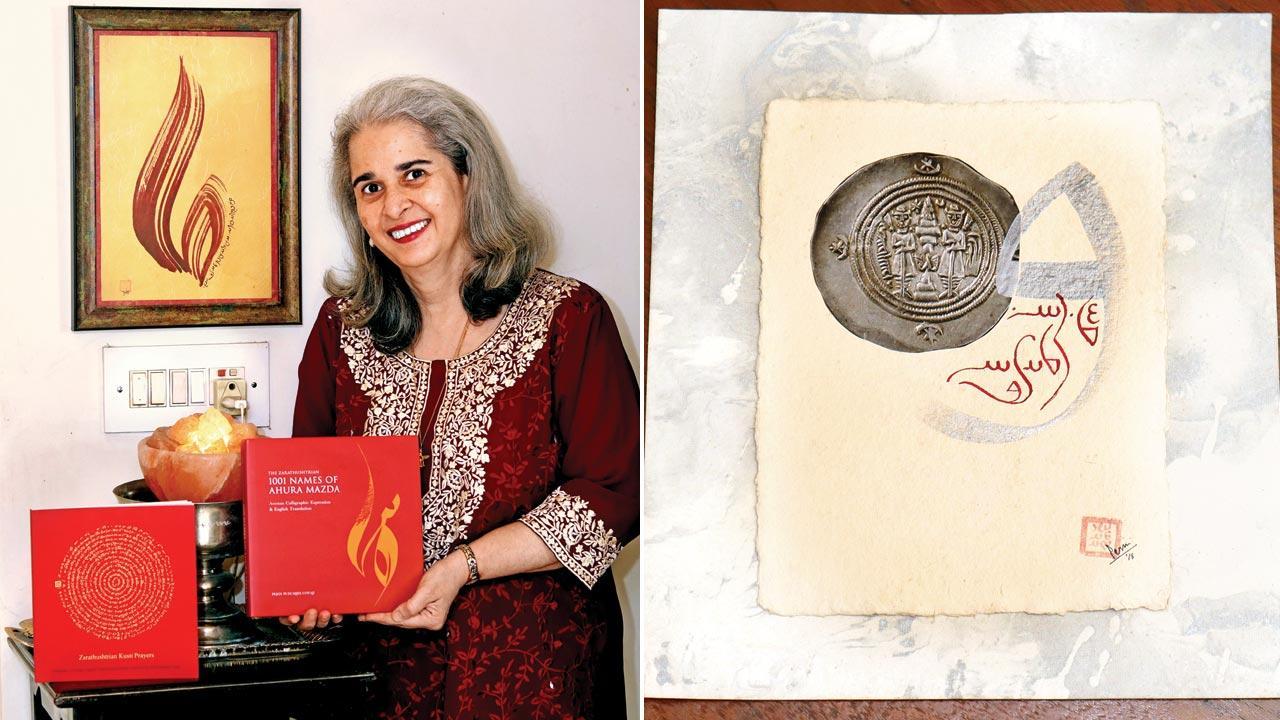
Calligrapher Perin Pudumjee Coyaji says she has been divinely guided to revive the ancient Avestan script; (right) This inscription of a coin features the prayer Kem na Mazda, which she calligraphed in Avestan
Perin Pudumjee Coyaji was just 25 when she decided to switch gears from industrial copywriting to calligraphy. It was 1996; a chance to study the art under master calligrapher Achyut Palav, whom she calls her guru, set her off on the path of rendering letters in artistic forms. “I was keen to do something more meaningful with my life,” she recalls. For nearly three years after, she travelled weekly from Pune to Palav’s Dadar office, to study the basics and return home in the evening, while also freelancing as a copywriter.
As a child, Pudumjee Coyaji was fascinated by old letterforms; one of her treasures was a lettering practice book gifted to her mother, Dinky Pudumjee, by a cousin. She was all of 11 when she began tracing Old English letters. Two decades later, she is known for her seminal work in reviving Avestan, an ancient East Iranian language that uses the Pahlavi script—a code script of 12 primary letters—in which the Avesta, or religious text of Zoroastrianism, is written.
Trending Stories
Latest Photos
Latest Videos
Latest Web Stories
ADVERTISEMENT

Ganeshotsav 2026

ADVERTISEMENT