






Home / Sunday-mid-day / / Article /
India United Mills nos. 2-3 to reconnect with Mumbai city
Updated On: 09 September, 2018 08:40 AM IST | Mumbai | Shekhar Krishnan
In its new avatar as a museum, India United Mills nos. 2-3 will reconnect the city with its vanishing industrial heritage

Listen to this article :
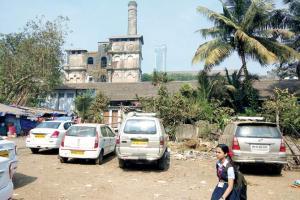
The India United Mills no. 2 and 3 were handed over to the BMC in 2009
In the past 20 years, as most of Mumbai’s 60 cotton textile mills have closed or redeveloped, a vast heritage that was always invisible to the public has almost entirely disappeared from the city. Hidden from view behind massive compound walls — until the coming of flyovers and high-rises in the 2000s — the mills of mid-town Mumbai were some of the first factories of the global Industrial Revolution, when Bombay was known as the “Manchester of the East”. While most of these enormous compounds have since gentrified into the offices, malls, banks and towers of a new global economy, a handful of Mumbai’s most historic mills remain managed by the Centre-owned National Textile Corporation (NTC).
The erstwhile India United Mills nos. 2-3 in Kalachowky are now being planned by the municipal corporation as the city’s newest and largest museum. Devoted to the history of textiles and industry, the restored mill compound is due to open in phases beginning next year. This will give most citizens of Mumbai their first view past the gates of one of the city’s earliest cotton mills — and into the rich industrial heritage earlier only visible to the workers, staff and owners who built India’s first modern industry in Mumbai.
Trending Stories
Latest Photos
Latest Videos
Latest Web Stories
ADVERTISEMENT
Mid-Day Fast
ADVERTISEMENT

ADVERTISEMENT