






Home / Sunday-mid-day / / Article /
Is Bollywood ‘trans’itioning?
Updated On: 13 February, 2022 07:50 AM IST | Mumbai | Nidhi Lodaya
Even as films are making room for the LGBTQiA+ experience, filmmakers and writers weigh in on who should have the right of way to tell marginalised stories

Listen to this article :
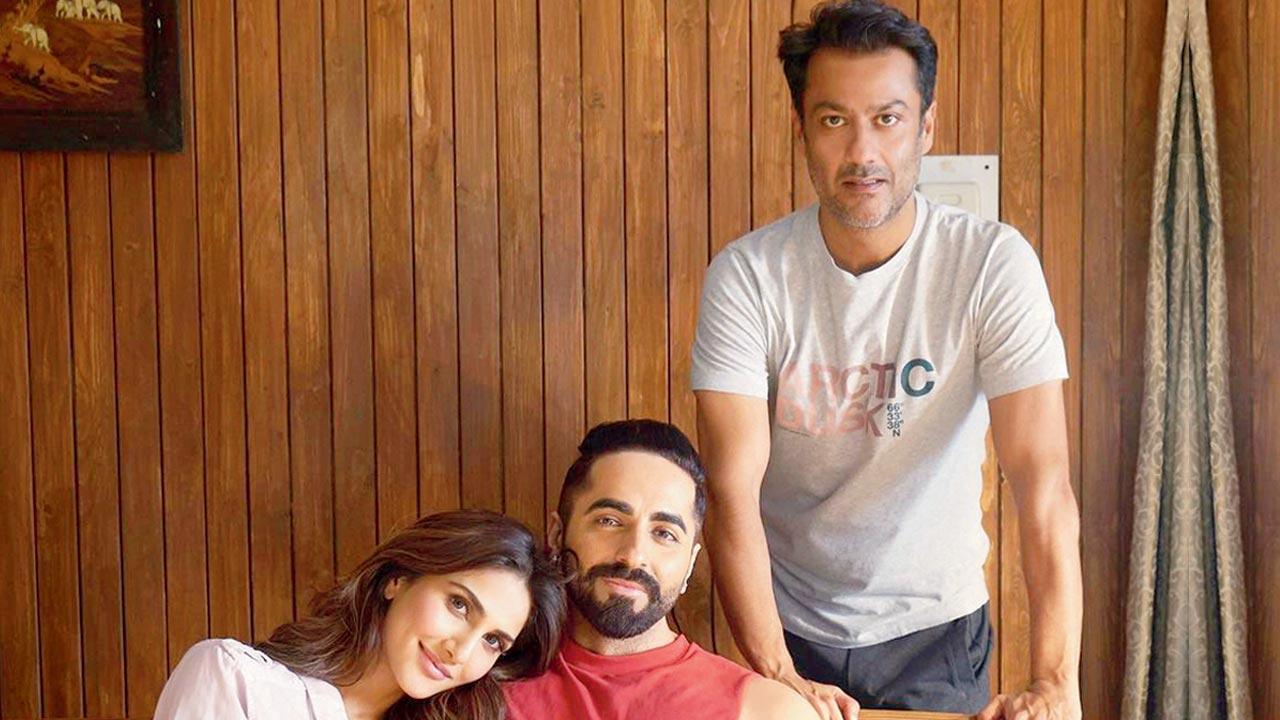
Chandigarh Kare Aashiqui tackles the trans issue from a cis male’s perspective
When the Ayushmann Khurrana and Vaani Kapoor-starrer Chandigarh Kare Aashiqui released in December last year, it garnered a lot of interest for its sensitive portrayal of a difficult subject. The film revolves around Manu (Khurrana), a cisgender male bodybuilder in Chandigarh, who falls in love with Maanvi (Kapoor), a Zumba instructor, only to later find out that she is transfeminine, a person who was assigned male at birth, identifies with a female gender identity and chooses to transition to womanhood.
Supratik Sen, who co-wrote the film with Tushar Paranjape, says, “Since we don’t belong to the [LGBTQiA+] community, it was very important for us to really know that world, so that we don’t say anything, which is emotionally unauthentic.”But filmmaker and editor Apurva Asrani, who co-wrote and edited Shahid (2013), identifies as a homosexual, feels that “representation is key” to create an authentic experience.
Trending Stories
Latest Photos
Latest Videos
Latest Web Stories
ADVERTISEMENT
Mid-Day Fast
ADVERTISEMENT

ADVERTISEMENT