






Home / Sunday-mid-day / / Article /
Just your cup of tea
Updated On: 04 July, 2021 08:07 AM IST | Mumbai | Sucheta Chakraborty
Turning their attention away from exports for the first time, the young inheritors of one of Darjeeling’s heritage tea gardens are aiming to revive its struggling tea trade with a subscription service and moving away from the exploitative, colonial model to one that drives community welfare and ecological reform

Listen to this article :
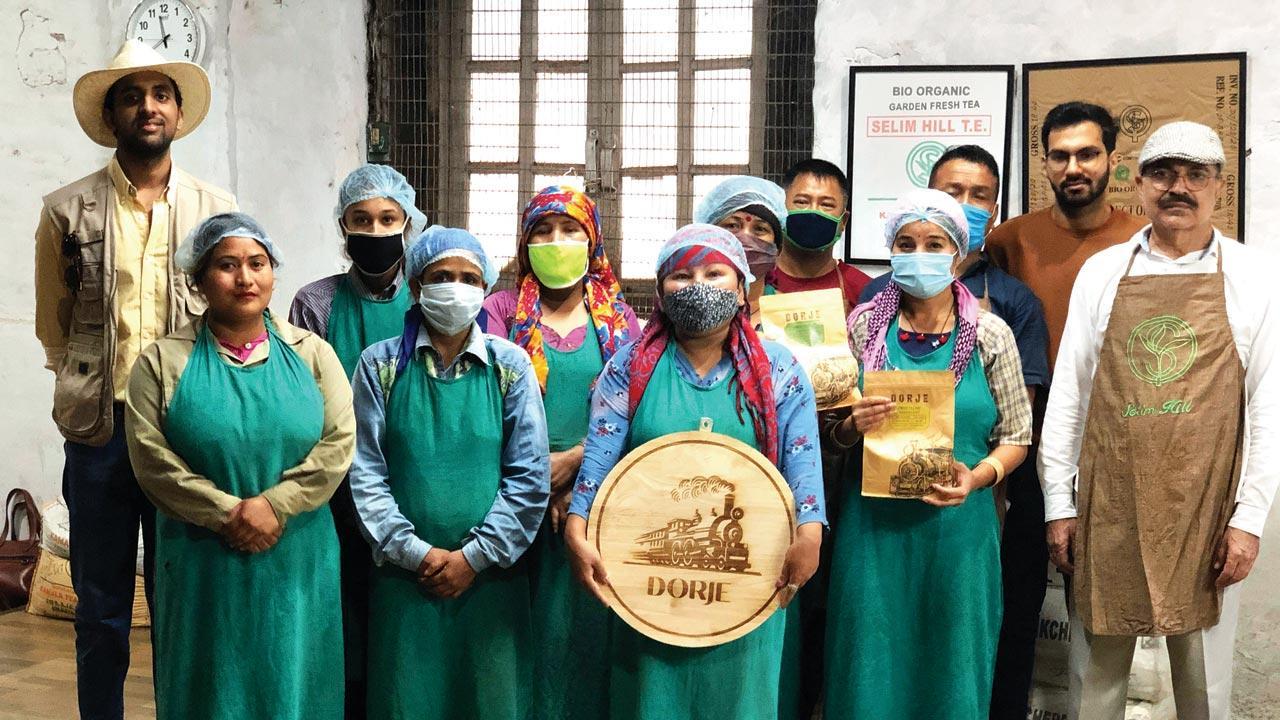
The team at Dorje Teas
While the pandemic has only made things more acute, Darjeeling’s tea industry, known to produce the “Champagne of Teas”, has been on the wane for years. Erratic rainfall and wind patterns, and a 104-day strike in the Darjeeling hills in 2017 called by the Gorkha Janmukti Morcha (GJM) for a separate state of Gorkhaland during the peak harvest season, when the region’s tea market was taken over by cheaper and lower grade teas from Nepal, contributed to this slump. A hit with international clientele, Darjeeling tea has also been unable to reach its fans since the 2020 Coronavirus outbreak.
At home in Kolkata during the lockdown last year, Sparsh Agarwal, was struck by how badly the Selim Hill Tea Garden, which has been in his family for four generations, was hit. “India has 10,000 tea estates out of which only 74 are Darjeeling tea estates,” says Agarwal over a phone call from the hill station. “The dilemma that we were facing was that if we are the world’s best tea-growing region, how is it that these heritage, romanticised gardens are facing huge losses.” The student of political science and international relations who had begun work at the Centre for Policy Research in New Delhi, had fond memories of spending many a school break with friends at the family garden. He was determined to not let it slip into the hands of developers. He would make one last-ditch effort for its survival.
Read Next Story
Trending Stories
Latest Photos
Latest Videos
Latest Web Stories
ADVERTISEMENT
Mid-Day Fast
ADVERTISEMENT

ADVERTISEMENT