Home / Sunday-mid-day / Article /
Maharashtra bus drivers hope for kisan strike-like success
Updated On: 21 November, 2021 10:15 AM IST | Mumbai | Jane Borges
mid-day spends a day with protesting MSRTC bus drivers at Azad Maidan, among the lowest-paid bus force in India





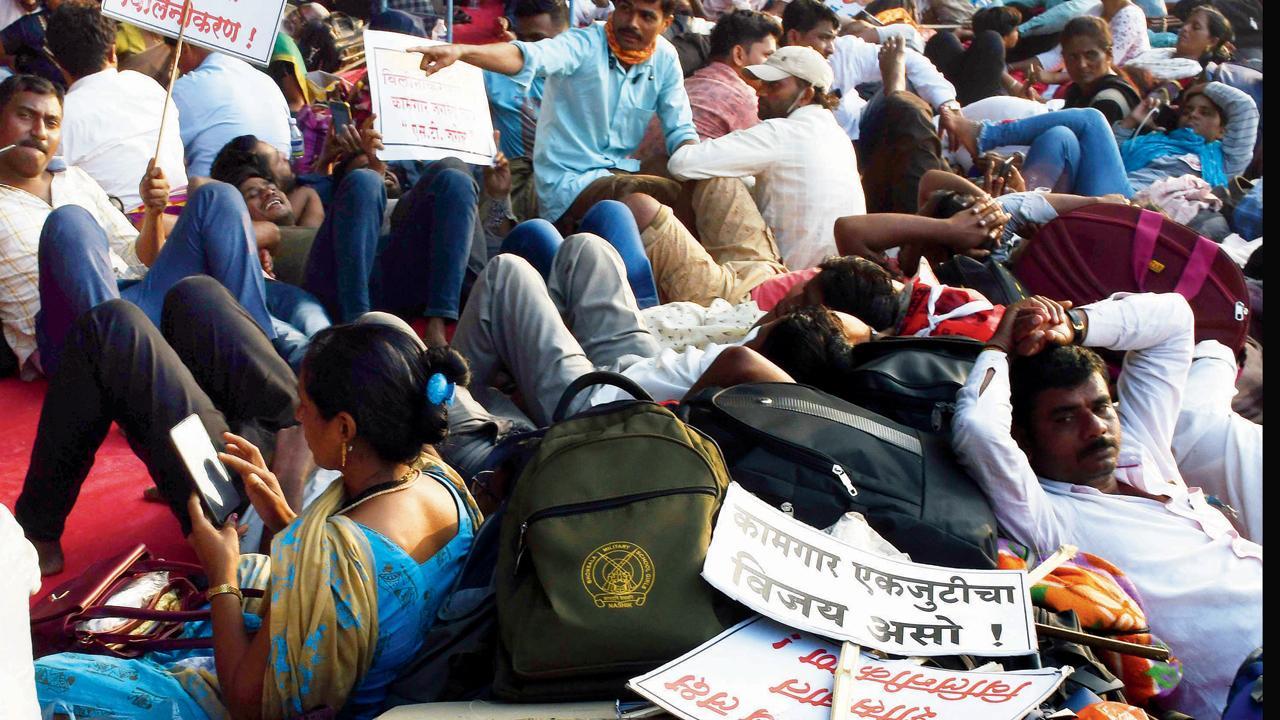
Striking MSRTC staff at Azad Maidan, Fort. The employees, working in the 250-odd state depots, want the merger of the loss-making corporation with the state. Pic/Ashish Raje
It's been 21 days since the employees of the Maharashtra State Road Transport Corporation (MSRTC) began trickling into Azad Maidan in Fort. The early days of November, they recall, were nippy. For the protesters who came to the ground, bag and baggage, determined to make the thin carpet on gravel and mud their bed of dissent and rest, this at least seemed like a pleasant welcome. But the day we visit, Mumbai is struggling with afternoon humidity peaking at 85 per cent. The truant weather with out-of-turn showers has been a bit of a dampener for the swarm of protesters. So has the recent order to return to work. Just a day prior, on November 17, eight per cent of the protesting workforce—7,541 of the total 92,266 employees—had resumed duty. As per reports, 23 buses had begun operations at various MSRTC depots. “They were threatened by their unions to return to work or risk being suspended. What could they do?” a bus driver says. “Even I got the order, but I am not going to cower. I am going to stay put till our demand is met.” Around 2,000 employees have already been suspended as a fallout of the ongoing strike. On Friday, the transport body terminated services of 238 daily wage workers and suspended 297 staffers.
The staff’s demands are exhaustive, but the remedy to their problems is one. The MSRTC employees, working in the 250-odd state depots, want the merger of the loss-making corporation with the state. “That will be the end to all our suffering,” feels Nitin Murlidhar Bhagwat, a social worker and bus conductor. Bhagwat has taken the long, arduous road to Mumbai. He arrived here on foot from Baramati, 255 km by road, last Friday. It took him 12 days, he says. Giving him company was his 21-year-old son Raj Bhagwat, who is staying at a relative’s home, while Bhagwat continues his strike. “I was very disturbed by the news of coworkers forced to kill themselves. It broke my heart,” he says, referring to the spate of suicides that have been reported among employees in the last 18 months due to delay in salaries, saddling many in neck-deep loans.
Trending Stories
Latest Photos
Latest Videos
Latest Web Stories
ADVERTISEMENT

Ganeshotsav 2026

ADVERTISEMENT