Home / Sunday-mid-day / Article /
Making a beeline
Updated On: 25 July, 2021 08:34 AM IST | Mumbai | Sucheta Chakraborty
A small collective in a village in Himachal Pradesh has been sourcing rare varieties of authentic raw honey, while working towards a sustainable and non-exploitative model of production





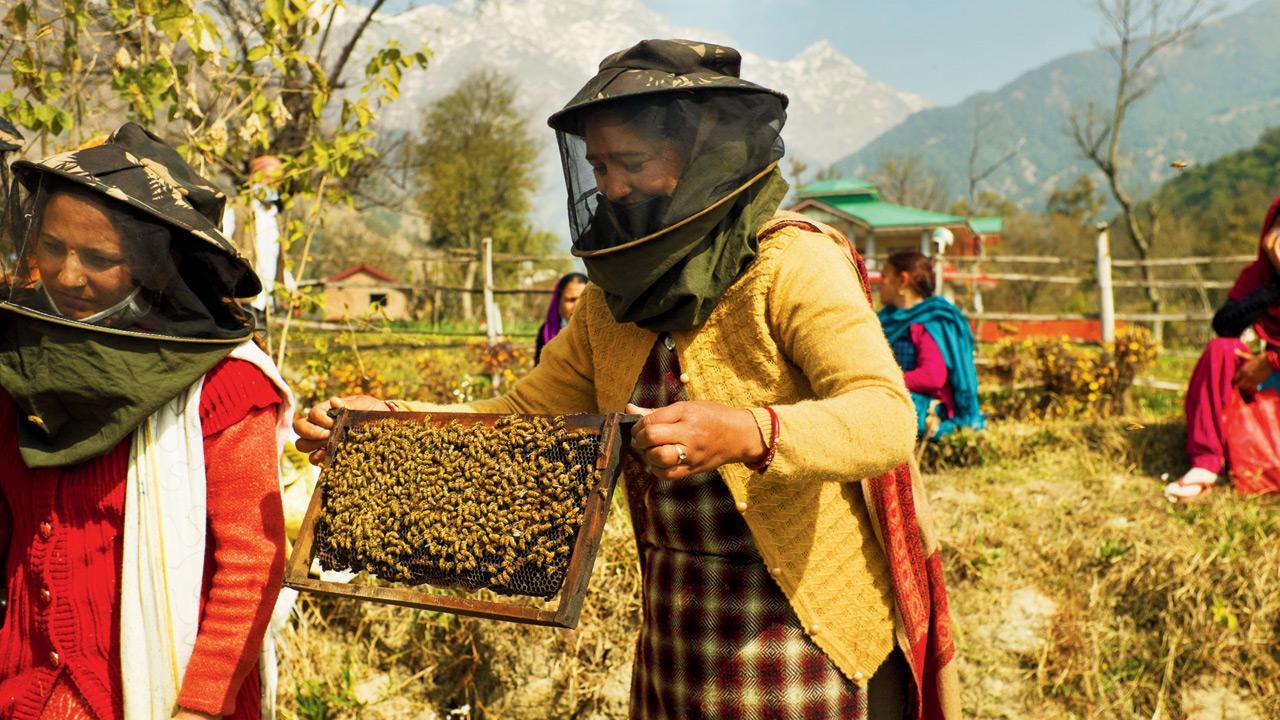
Beekeeping has been a male-dominated profession. The Tenacious Bee Collective by Malini Kochupillai and Kunal Singh has attempted to involve women in allied activities such as harvesting beeswax
Malini Kochupillai and Kunal Singh started the Tenacious Bee Collective in a small village in Kangra district near Palampur, Himachal Pradesh, in 2018. They wanted to bring unpasteurised Himalayan honey to consumers, while also addressing some of the systemic problems faced by the region. On the one hand was the lack of opportunities and exposure for the youth. On the other, were the problems faced by beekeepers in the state: a declining bee population brought about by the destruction of local ecology to make way for infrastructural projects, low financial returns causing beekeepers to leave the profession, exploitative methods that beekeepers were forced to practise with their bees, which included extracting honey before it matured and in excessive quantities. This would lead to circulation of low-grade honey in the market.
“It is a vicious cycle that affects everyone from the grassroots to the consumer,” says Kochupillai, explaining how as part of large commercial operations, bees are often sucked dry of all their nectar and then pumped with antibiotics to increase their productivity. Further, in commercial beekeeping, the insects are also carried around as plants flower through seasons, this transportation stressing them out and in turn impacting their productivity and health. At the Tenacious Bee Collective, the founders, contrastingly, through a small and involved set-up, identify locals who keep bees, harvesting small amounts of honey while also lending the beekeepers year-round support and equipping them with the skills and exposure to become entrepreneurs themselves. Over their three years, the collective has been able to create a small network of beekeepers operating across the state, persuading them to follow good beekeeping practices and ethical standards of harvesting. “We give them premium rates so that they are not exploiting their bees, and the bees have enough food and sustenance for lean flowering periods and are, therefore, healthier in the next season,” says Kochupillai.
Trending Stories
Latest Photos
Latest Videos
Latest Web Stories
ADVERTISEMENT

Ganeshotsav 2026

ADVERTISEMENT