







Home / Sunday-mid-day / / Article /
Mint fresh
Updated On: 13 June, 2021 09:49 AM IST | Mumbai | Anju Maskeri
The pandemic and resultant lockdown have meant that farmers’ collectives and indigenous foods aggregator platforms are doing roaring business as interest in sustainable choices, contactless shopping and ethical eating gathers new supporters

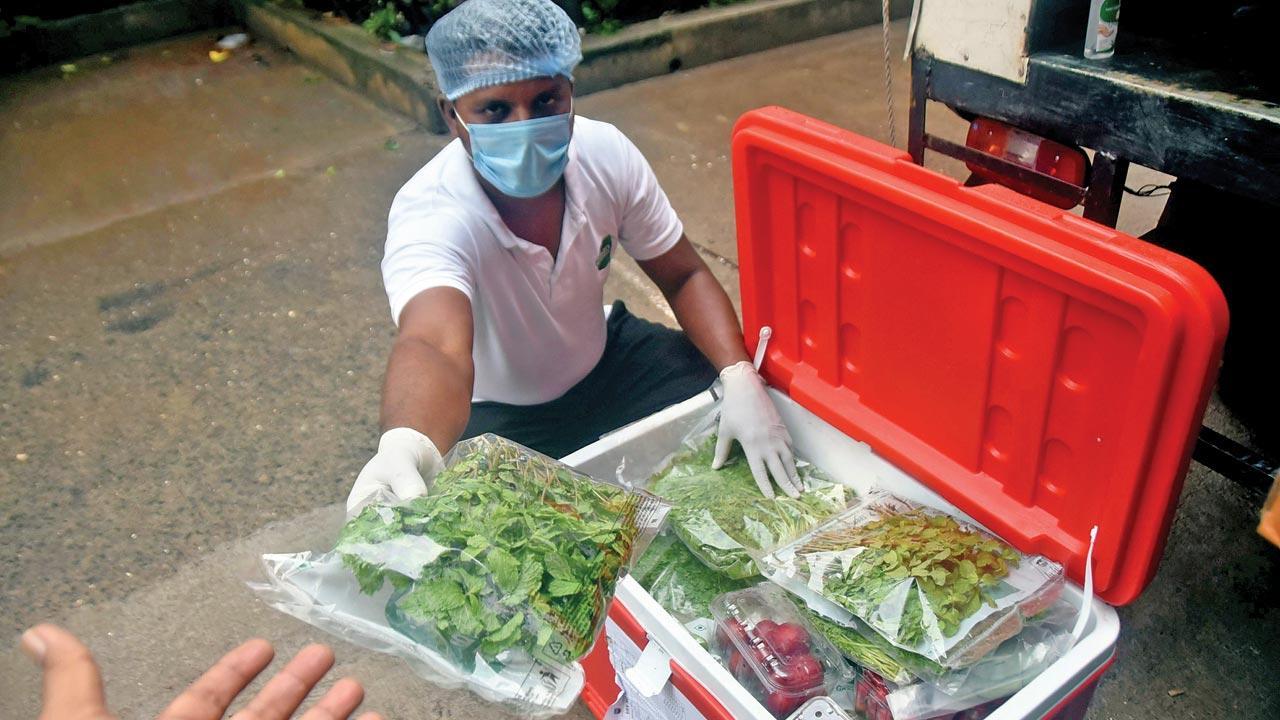
Staffers from Kisan Konnect, a farmer producer company, deliver vegetable supply to a Wadala society. Pic/Pradeep Dhivar
At the start of the pandemic, Manish More, a farmer in Junnar tehsil, grew anxious when the demand for tomatoes dropped drastically in Pune. “Customers were willing to pay only Rs 2-R3 for a kilo, whereas in Mumbai, the ongoing rate was Rs 50. We needed to target the right market,” he says. With the help of a friend from Mulund, More, 37, teamed up with a dozen other growers and began supplying vegetables in the central suburb. Knowing that hawking tomatoes alone wouldn’t yield much, they made assorted vegetable baskets of 7 kg and 9 kg. The consumption patterns showed that exotic veggies like asparagus, mushroom, sweet corn, broccoli, celery and lettuce were fast movers, making them collaborate with farmers who specialised in this produce. “It began to take the form of a movement. What we also realised is that it was not enough to simply supply organic vegetables in urban pockets. We needed to know what to [supply] where, and to whom.” In the last one-and-half years, they have spent Rs 16 lakh on digital marketing and building an app. This, More sees not as an expenditure, but investment. From 100 baskets a day in 2020, they now sell 1,600 on an average. His year-old, certified farmer-producer company, Kisan Konnect, includes 1,200 growers.
The demand for organically grown, indigenous and sustainable foods has been on the rise for the last few years, but it’s the Coronavirus pandemic that has induced a behavioural shift like no other, observe experts. As per an ASSOCHAM study, the Indian organic market stood at over Rs 1,200 crore last year, and this year it is expected to cross Rs 2,000 crore. The change is being seen globally, as well. A market research conducted last year by Meticulous Research revealed that the global organic food market is expected to grow at a Compound Annual Growth Rate (CAGR) of 12.2 per cent from 2020 to 2027 to reach USD 272.18 billion by 2027.
According to Fiona Arakal, executive director at Ishka Farms, spread over 365 acres of agricultural land in Niravi Pudhupatti village, Tuticorin district, the pandemic has brought mixed luck for farmers. “There are some, who are poised with direct accessibility to the market, and therefore, have fared better. This includes people like us, who deal with specialty foods. But farmers in general have been hit badly in this country. We don’t have cold chain facilities and the modes of transport to deliver produce to urban centres have been disrupted.”
Read Next Story
Trending Stories
Latest Photos
Latest Videos
Latest Web Stories
ADVERTISEMENT
Mid-Day Fast
ADVERTISEMENT

ADVERTISEMENT