






Home / Sunday-mid-day / / Article /
Monks ki baat
Updated On: 15 September, 2024 07:52 AM IST | Mumbai | Team SMD
In this extract from his new book, noted historian William Dalrymple details how Buddhist monks shaped India’s early religious history in the second century BCE at the little known Bhaja Caves that still stand just 2.5 hours from Mumbai

Listen to this article :
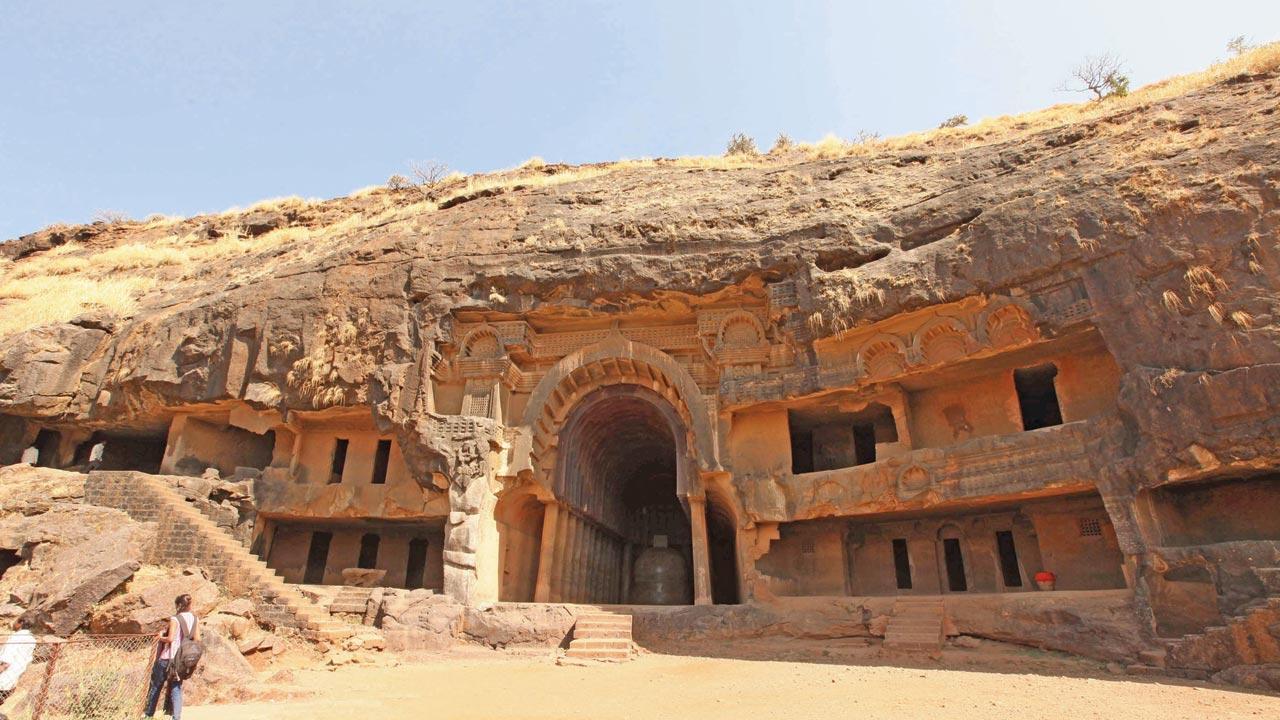
The Bhaja caves, dating back to the early second century BCE, open with a 30-foot-tall horseshoe arch
Arguably the most ancient near-intact Buddhist monastery in the world is the great hall of Bhaja, built into the side of a cliff face of a remote range of hills high in the Western Ghats. It lies to the west of Pune in the wild heartlands of the Deccan and dates from the early second century BCE. Open to the environment at one end and entered by a magnificent horseshoe arch thirty feet tall, it still miraculously preserves its ancient wooden roof beams, like the wrecked keel of a prehistoric ark smashed against the rocky ceiling of the cave. The hard teak blades of these rafters cut the light from the shade with the same Manichaean clarity that they did two millennia ago.
This amazing masterwork of early Buddhist cave architecture, every bit as spectacular as anything at Petra, is a prototype of the sort of cave monastery which would later spread with Buddhism over the Himalayas to Afghanistan, China and Japan, or by sea to Sri Lanka, Burma, Thailand, Cambodia and the rest of South-east Asia. The roots of all this lie scattered around these stark Deccan hills, alone among the crags and dragon’s-back peaks, apparently forgotten by all.
Read Next Story
Trending Stories
Latest Photos
Latest Videos
Latest Web Stories
ADVERTISEMENT
Mid-Day Fast
ADVERTISEMENT

ADVERTISEMENT