Home / Sunday-mid-day / Article /
Mumbai: A city of dreams… but not for all
Updated On: 17 July, 2022 08:48 AM IST | Mumbai | Nidhi Lodaya
Does changing traffic light signage to a lady’s silhouette make it #MumbaiForEveryone?





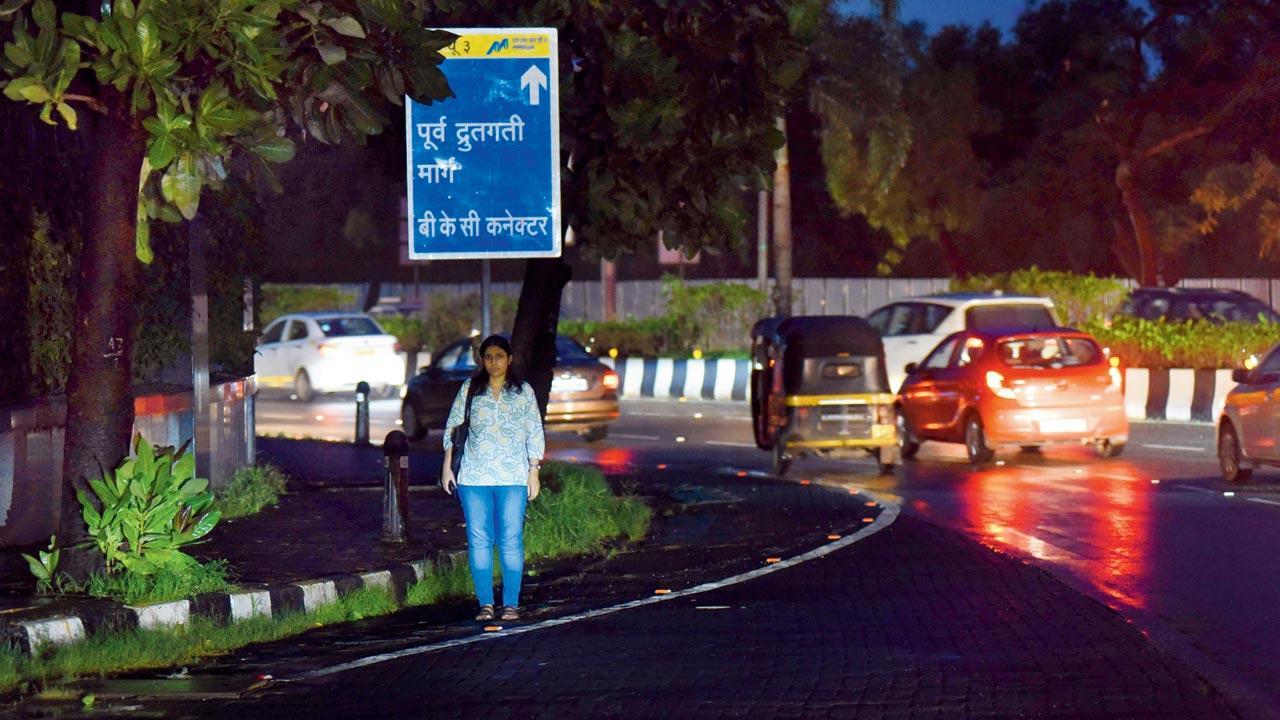
This writer spent more than an hour in BKC at 7.30 pm on a weekday, walking through all the bylanes and the main road. Most of these had no streetlights, and the footpaths were dimly-lit. Pic/Sameer Markande
The official Instagram handle of Tactical Urbanism Mumbai, which was started by Brihanmumbai Municipal Corporation (BMC), posted about changing the traffic light signage to a woman instead of the usual man a week ago. “Inclusive signage plays an important role in making public spaces feel like they belong to people of all genders, ages, and abilities,” the post said, tagging it #MumbaiForEveryone. This move was applauded but many were not convinced that it is enough to make a city inclusive for all kinds of people, gender included.
“Signages are surely one way to make city spaces gender-inclusive,” says Hitesh Vaidya, Director of National Institute of Urban Affairs (NIUA). “[However,] there is a need to bring about a change in the elements, design, and planning of our built environments, and ultimately across the entire practice of urbanisation.” Other experts agree that this first step should not be the only step.
Trending Stories
Latest Photos
Latest Videos
Latest Web Stories
ADVERTISEMENT
Mid-Day Fast
ADVERTISEMENT