






Home / Sunday-mid-day / / Article /
Outsider looking inside
Updated On: 20 June, 2021 08:02 AM IST | Mumbai | Shweta Shiware
Why is the representation of one culture by a person of another fraught with anxiety? Two designers debate cultural appropriation

Listen to this article :
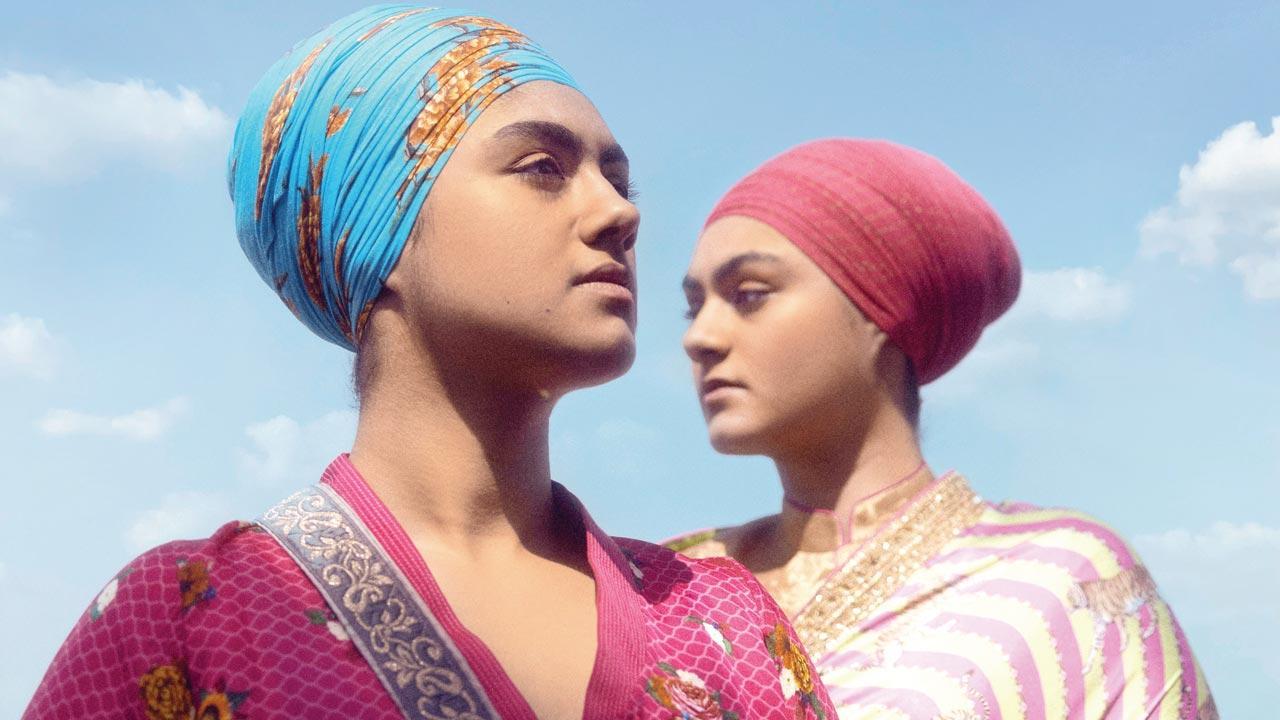
Subject matter expert Gursimran Kaur, 24, and photographer Asees Kaur, 20, (foreground) featured in Karan Torani’s campaign. As Amritdhari Sikhs, both maintain five articles of faith, referred to as the five Ks. Pics/Vansh Virmani
Beautiful is not an adjective you’d usually associate with cultural appropriation. But that is the word that comes to mind when you see Gursimran Kaur, 24, draped in a saree with a print of a prowling tiger while Asees Kaur, 20, wears a rani pink kurta and Patiala salwar in Karan Torani’s spring-summer 2021 collection, Jhooley. It is only when your gaze shifts slightly closer that you go, hey, is that a dastar (turban) and kirpan (knife) they are wearing?
In this instance, can the designer be held accountable for appropriation if the women in the campaign—who choose to identify themselves as Amritdhari Sikh—are wearing discernable symbols of their faith? Amritdhari Sikhs are individuals who have undergone the Amrit Sanskar initiation ceremony akin to baptism, and live by the rules of the Sikh code of conduct, including wearing a dastar and carrying the kirpan, a ceremonial sword or knife to emphasise martial strength.
Read Next Story
Trending Stories
Latest Photos
Latest Videos
Latest Web Stories
ADVERTISEMENT
Mid-Day Fast
ADVERTISEMENT

ADVERTISEMENT