Home / Sunday-mid-day / / Article /
Quantum Café: What if time ran backwards in Mumbai?
Updated On: 20 July, 2025 08:43 AM IST | Mumbai | Nishant Sahdev
If someone turns on a light in Colaba, a bulb in Andheri flickers at the same instant – our chaotic city is a perfect Petri dish for quantum entanglement experiments



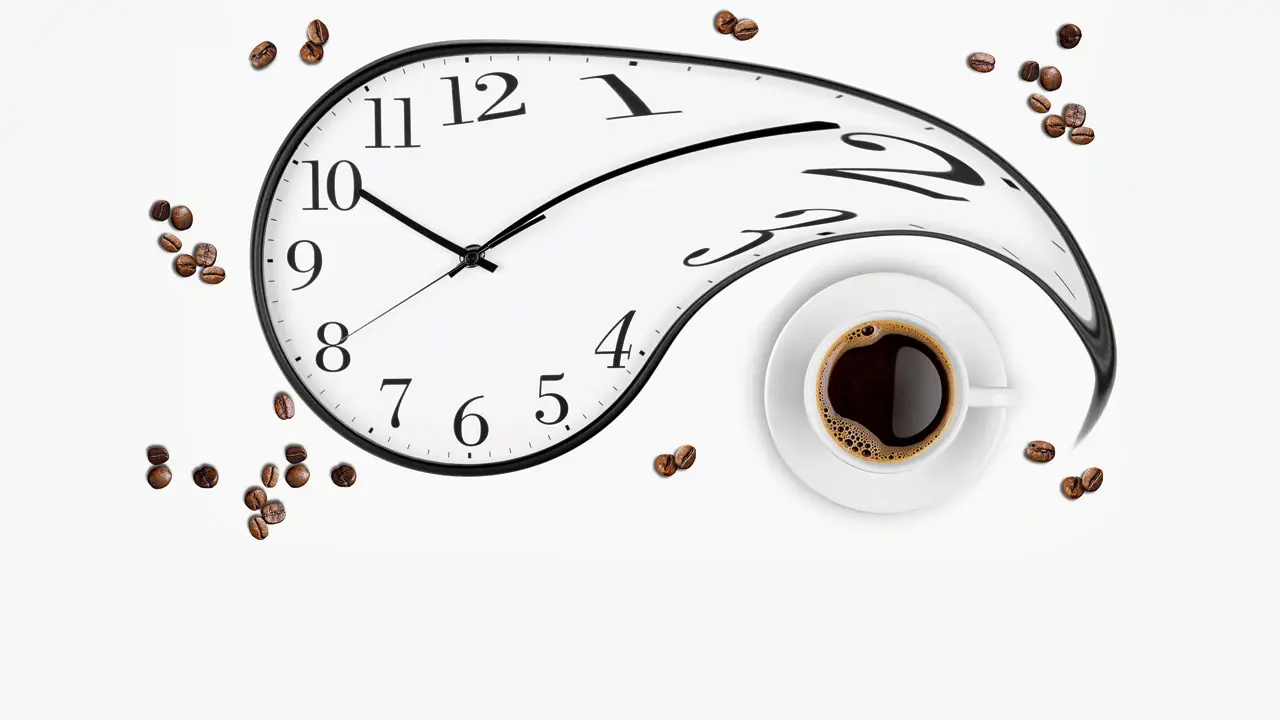
REPRESENTATION PIC
It’s a drizzly Sunday in Bandra. You’re at your usual café, watching the foam settle in your cappuccino. You stir it absent-mindedly and take a sip. And then, something strange happens: The foam rises again. The sugar you just added, dissolves into cubes. That warmth you felt? Gone. No, you’re not dreaming. You’ve just walked into a Quantum Café — a place where the rules of the universe don’t quite follow our everyday expectations.
In real life, time moves only one way. Ice melts, people age, spilled chai doesn’t leap back into the glass. This “arrow of time,” as physicists call it, is so intuitive that we never question it. But in the quantum world — the realm of atoms, electrons, and photons — this arrow gets a little wobbly. At that tiny scale, the laws of physics look the same whether time is moving forward or backward. In fact, if you were to film the motion of a single quantum particle and play it in reverse, there’s no way to tell the difference. It’s a principle called time-reversal symmetry. So why don’t we see this in real life? Why doesn’t your coffee unstir? The answer lies in entropy — a fancy word for disorder. Every time you stir sugar into tea or walk into a crowded Churchgate local, you’re moving from order to chaos. Entropy always increases with time. It’s the universe’s one-way street, and it’s why the mess in your room doesn’t clean itself. But under certain quantum conditions, time can appear to reverse — even if only briefly. And scientists are trying to understand how far we can stretch that boundary.

Trending Stories
Latest Photos
Latest Videos
Latest Web Stories
ADVERTISEMENT
Mid-Day Fast
ADVERTISEMENT

ADVERTISEMENT