Home / Sunday-mid-day / Article /
Chefs share cooking hacks to enhance food flavour and texture
Updated On: 29 January, 2023 10:17 AM IST | Mumbai | Phorum Pandya
The simple art of cooking down a flavourful liquid over a long time can romance the taste buds. However, none of it is possible without patience and respect for technique





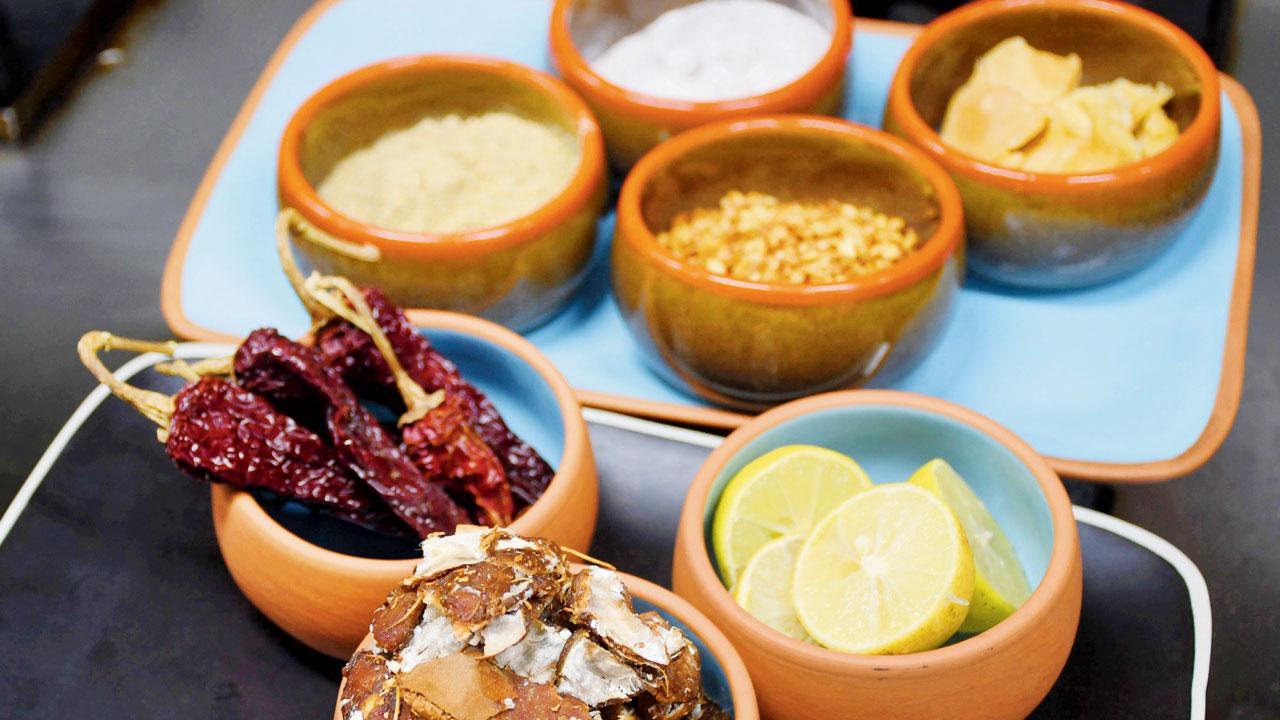
At Native Bombay, Bhairav Singh makes a reduction of tamarind and jaggery, served with butter garlic prawns. Patience, he says, is the key to a reduction process. Pic/Ashish Raje
If there’s any doubt whether less is more, then reducing a liquid mixture to intensify flavours proves it. While the French used this technique to make jus or savoury meat juices, India has relied on the technique to improve the shelf life of seasonal produce and to elevate the taste of gravies.
Executive chef Rahul Punjabi of Masala Library by Jiggs Kalra explains the concept: “In its simplest form, it is the act of boiling or simmering a flavourful liquid such as stock, juice or curry to remove water from it and intensify the flavour of the end product. The technique is best known in French cooking for savoury meat juices (jus). In India, we are no strangers to reduction. Often, we like to serve our food ‘latpata’ or coat the palate. This intensifies the spices, reduces the water to a level where it emulsifies with the natural fats in the gravy and has a hearty mouthfeel. A patient chef can achieve a tremendous amount of flavour by slowly reducing a curry till they achieve ‘latpatapan’.”
Trending Stories
Latest Photos
Latest Videos
Latest Web Stories
ADVERTISEMENT

Ganeshotsav 2026

ADVERTISEMENT